
Choosing the right ceiling fan size directly impacts your comfort and style. A fan that’s too small won’t circulate air effectively, making your room feel stuffy, while an oversized fan can create drafts and overwhelm the space. Proper sizing guarantees efficient airflow, boosts energy savings, and keeps your decor balanced. Considering room size, ceiling height, and personal style helps you pick the perfect fit. Keep exploring to discover how to select the ideal fan for your space.

Get furniture and decor delivered free with Prime
- Fast, free delivery on millions of items
- Prime Video, Amazon Music and more included
- Member-only deals all year
Key Takeaways
- The right fan size ensures optimal airflow, maintaining comfort and preventing stuffiness or drafts.
- Matching fan size to room dimensions enhances aesthetic balance and complements your decor style.
- Larger fans suit bigger rooms for effective circulation, while smaller fans are ideal for intimate or compact spaces.
- Proper sizing reduces noise and vibrations, contributing to a quieter, more stylish environment.
- Correct fan size improves energy efficiency, lowering cooling costs while enhancing overall room comfort.
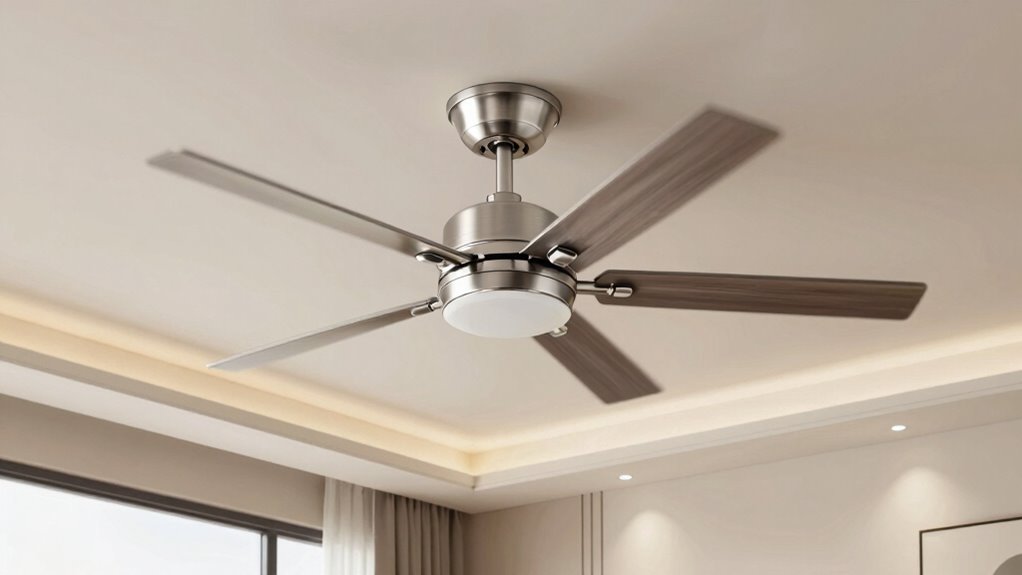
Choosing the right ceiling fan size is fundamental for maximizing comfort in your space. When you select a fan that’s too small, it won’t circulate air effectively, leaving you feeling stuffy and uncomfortable, especially during warmer months. Conversely, a fan that’s too large can create a draft that’s uncomfortable and overpower the room’s decor. To get it right, you need to take into account the size of your room and how the fan will fit within the space. Proper sizing enhances energy efficiency by ensuring the fan moves enough air to cool the room without wasting electricity. Larger fans can cover more area, reducing the need for additional cooling devices, which helps lower your overall energy bills. Small fans, on the other hand, are best for smaller rooms where over-circulating air might lead to unnecessary energy use.
Your choice also hinges on installation considerations. For example, ceiling height plays a pivotal role—if your ceiling is very high, you’ll want a bigger fan with a longer downrod so the blades are positioned at an ideal height for air circulation. Conversely, in rooms with standard 8-foot ceilings, a fan with a smaller diameter ensures it doesn’t look out of place or interfere with headroom. You’ll also want to think about the mounting options, as some larger fans require sturdier support and more complex installation, which could influence your decision. Guaranteeing the fan is securely mounted guarantees safety and longevity, preventing wobbling or potential hazards down the line. Additionally, considering fan blade pitch can improve airflow efficiency and overall comfort in your space. Properly choosing a fan that matches your room’s size and layout can also prevent unnecessary noise and vibrations, contributing to a more peaceful environment.
Furthermore, airflow distribution is crucial for maintaining a consistent temperature throughout the room, which can be optimized by selecting the right size and blade pitch. It’s important to note that room size and fan size should be proportionate to ensure optimal airflow and aesthetic balance. Beyond size, you should consider the style and finish of the fan to match your room’s decor, but size remains essential for functionality and comfort. When you choose a fan that fits well within your space, it not only looks good but also performs efficiently, saving energy and reducing your cooling costs. Proper sizing also makes maintenance easier, as a correctly selected fan will have blades that aren’t difficult to access or clean. Remember, a well-sized fan balances airflow, energy efficiency, and aesthetic appeal, making your space more comfortable and visually cohesive. By paying attention to these factors, you can enjoy a cooler, more comfortable room while keeping your energy bills in check.
ceiling fan size for 200 sq ft room
As an affiliate, we earn on qualifying purchases.
As an affiliate, we earn on qualifying purchases.
Frequently Asked Questions
How Do Ceiling Fan Sizes Vary for Different Ceiling Heights?
For different ceiling heights, you choose ceiling fan sizes based on the ceiling height and fan placement. If your ceiling is standard height (8 feet), a fan with a 52-inch blade span works well. For higher ceilings, like 10-12 feet, opt for larger fans or install downrods to guarantee proper airflow and balance. Correct fan placement, centered on the room and at an appropriate height, keeps air circulating efficiently and maintains comfort.
Can a Small Fan Be Effective in a Large Room?
A small fan can be effective in a large room, but it’s like fitting a square peg in a round hole—limitations exist. Small fans often struggle to circulate air efficiently across vast spaces, which can impact comfort. Aesthetic considerations also matter; a tiny fan might look out of place in a large room. For best results, choose a larger fan designed for bigger areas to guarantee proper airflow and style harmony.
Are Larger Fans Noisier Than Smaller Ones?
Larger fans can be noisier than smaller ones, but it depends on fan blade materials and noise reduction techniques used. Fans with metal blades tend to produce more noise than those with wood or composite blades. To minimize noise, look for fans with quiet motors and advanced noise reduction tech like rubberized mounts or aerodynamic blades. Proper installation and regular maintenance also help guarantee quieter operation regardless of size.
How Does Fan Size Impact Energy Efficiency?
A larger fan generally consumes more energy because it has a bigger blade area, requiring more power to operate. However, if the fan has a high-efficiency motor, it can offset increased energy consumption by using less electricity for the same airflow. So, your choice of fan size directly impacts energy efficiency, and selecting a model with a high-quality fan motor can help you save on energy costs while maintaining effective airflow.
What Are the Safety Considerations for Large Ceiling Fans?
Think of your large ceiling fan as a mighty oak—solid and steady, but needing careful attention. Make certain the blades are securely attached, especially if made from lightweight material, to prevent wobbling. Install a remote control with safety features, and always check that the fan’s mounting is sturdy. Regularly inspect for loose parts or cracks in the blade material, keeping your space safe and stylish.
Conclusion
Choosing the right ceiling fan size is like finding the perfect suit—it’s all about balance. When you select the right size, comfort and style come together effortlessly, transforming your space into a haven. Remember, as Goldilocks discovered, not too big, not too small—just right. So, trust your instincts, measure carefully, and enjoy the cool breeze and sleek look that a well-chosen fan brings, making your home feel just right.
Fall Picks
fall essentials
As an affiliate, we earn on qualifying purchases.