Natural cleaning is safe, effective, and affordable when you use simple ingredients like vinegar, baking soda, and citrus. Vinegar disinfects and cuts grime, while baking soda neutralizes odors and acts as a gentle abrasive. Lemons and other citrus add a fresh scent and natural disinfectant qualities. Making your own cleaners with these ingredients saves money and avoids harsh chemicals. Keep exploring to discover practical tips for using these staples in your everyday cleaning routine.

Get furniture and decor delivered free with Prime
- Fast, free delivery on millions of items
- Prime Video, Amazon Music and more included
- Member-only deals all year
Key Takeaways
- Use common household ingredients like vinegar, baking soda, and lemon for safe, natural cleaning solutions.
- Dilute vinegar with water to disinfect surfaces without harsh chemicals or damage.
- Incorporate baking soda for odor neutralization and gentle scrubbing on various surfaces.
- Combine essential oils with vinegar or baking soda to enhance cleaning power and add pleasant scents.
- Store homemade cleaners in airtight containers, label clearly, and choose eco-friendly packaging for affordability and safety.
As an affiliate, we earn on qualifying purchases.
The Power of Vinegar in Natural Cleaning
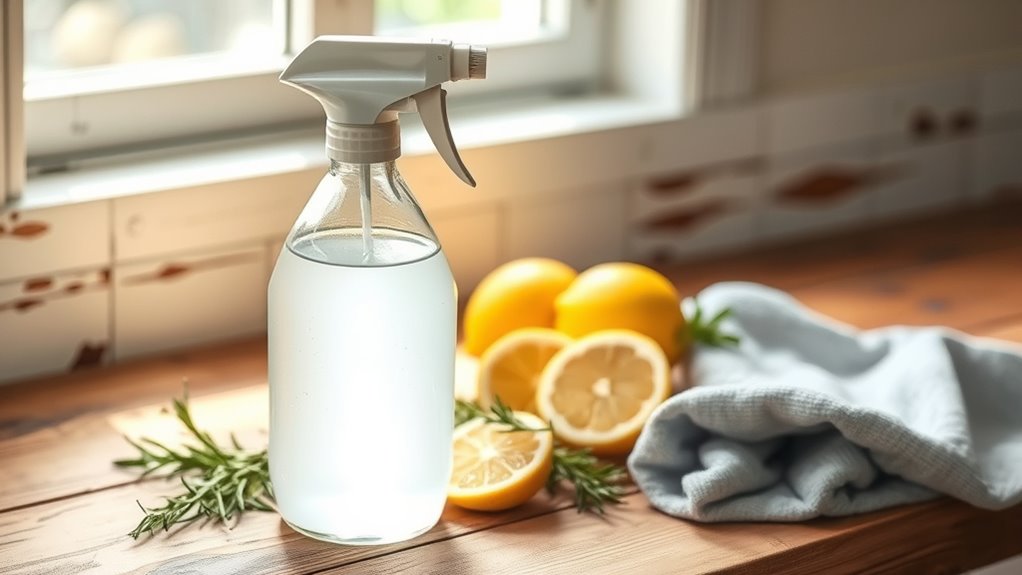
Have you ever wondered why vinegar is a staple in natural cleaning? Its antimicrobial properties make it an effective disinfectant, killing bacteria and germs on surfaces without harsh chemicals. You’ll find that vinegar’s stain removal capabilities are impressive, especially on glass, fabric, and even kitchen counters. Its acidity helps break down grime, soap scum, and mineral deposits, leaving surfaces spotless. Plus, vinegar is versatile—use it to clean windows, wipe down appliances, or eliminate odors. It’s affordable and eco-friendly, making it a practical choice for your cleaning routine. Just remember to dilute it properly and avoid using it on natural stone surfaces like granite or marble. With vinegar, you get a powerful, natural cleaner that’s safe for your home and the environment. Incorporating vinegar into your routine can also improve indoor air quality by reducing the need for chemical-based cleaners, which can release pollutants into the air.
Baking Soda: A Versatile Household Essential

Baking soda is a powerful natural cleaner that can tackle many household messes with ease. It’s also a budget-friendly option that helps you save money while keeping your home fresh. With its versatility, baking soda should be a staple in your cleaning routine. Additionally, incorporating baking soda can contribute to a more environmentally sustainable household by reducing reliance on chemical cleaners.
Natural Cleaning Power
Because of its incredible versatility, baking soda has become a go-to natural cleaning powerhouse in many households. Its natural ingredients make it safe and eco-friendly, ideal for tackling a variety of messes. When combined with essential oils, baking soda releases pleasant scents while boosting cleaning power. You can sprinkle it on carpets to absorb odors or make a paste with water and a few drops of oil for scrubbing surfaces. Its gentle abrasive quality helps remove stains without scratching. Baking soda also neutralizes acids and bases, making it effective against stubborn grime and grease. Its high pH level allows it to break down dirt and grease efficiently. Whether you’re cleaning kitchen counters, bathroom tiles, or freshening up trash cans, this natural ingredient provides a powerful, safe, and cost-effective solution. Its adaptability makes it an essential tool in your eco-conscious cleaning arsenal.
Cost-Effective Solution
As a cost-effective household essential, baking soda offers incredible value across a wide range of cleaning tasks. Not only does it help you save money, but it also promotes eco-friendly habits. Using baking soda can lead to significant cost savings, making it a smart addition to your cleaning routine. To maximize its benefits, try these budget-friendly tips: sprinkle it on carpets for freshening, scrub sinks with it, or add it to laundry for whitening. The emotional impact of saving money while keeping your home clean is priceless. Here’s a quick overview:
| Save Money | Feel Proud | Stay Green |
|---|---|---|
| Budget tips | Eco-friendly | Household hero |
| Affordable | Better environment | Peace of mind |
| Cost savings | Proud homekeeper | Natural choice |
Additionally, understanding Halloween traditions can inspire eco-conscious decorating ideas that complement your budget-friendly cleaning practices.
Lemon and Citrus: Natural Disinfectants and Fresheners

Have you ever noticed how the bright scent of lemon or other citrus fruits instantly lifts your mood? Citrus fruits, especially lemon, are natural disinfectants and fresheners. You can use lemon zest or citrus extracts to clean surfaces, thanks to their antimicrobial properties. Lemon zest contains essential oils that cut through grease and grime, leaving your home smelling fresh and clean. Citrus extracts, often found in store-bought cleaning solutions, are a safe alternative to harsh chemicals. Simply mix citrus extracts with water for an effective, natural disinfectant spray. Not only does this help eliminate bacteria, but it also adds a cheerful, invigorating scent. Incorporating lemon and citrus into your cleaning routine is an affordable, eco-friendly way to keep your space sanitized and smelling delightful. Embracing these natural ingredients aligns with the principles of Cultural Intelligence, promoting sustainable and culturally sensitive cleaning practices.
Making Your Own All-Purpose Cleaner
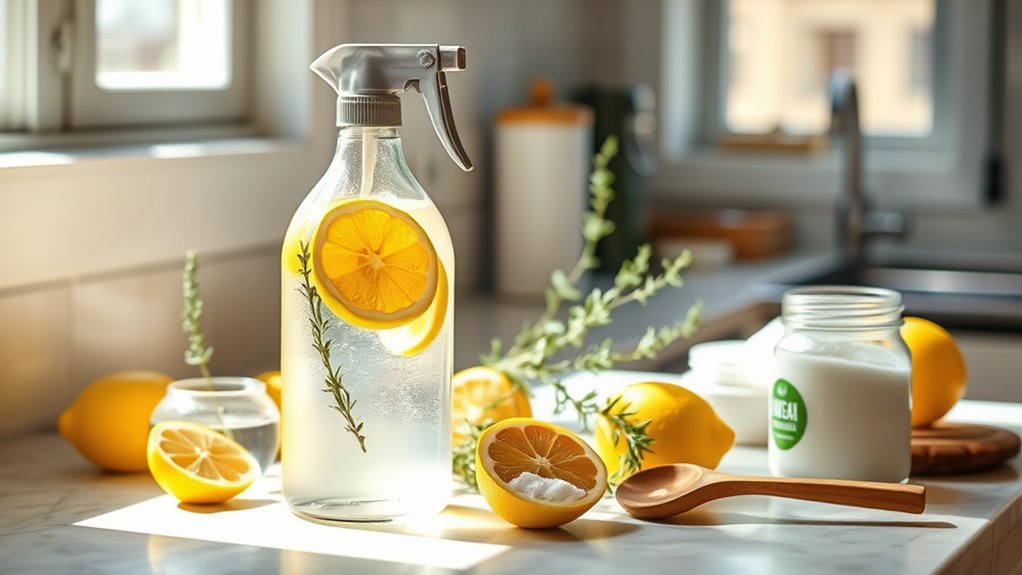
Making your own all-purpose cleaner is simple and budget-friendly. You only need a few common ingredients and a step-by-step process to mix them. Once you’ve got your cleaner, I’ll share tips on storing it and using it effectively. Incorporating natural ingredients can also help you achieve effective cleaning without harsh chemicals.
Simple Ingredients Needed
What simple ingredients do you need to create an effective all-purpose cleaner at home? You only need a few basic items. First, start with water as your base. Second, add herbal infusions—like chamomile or lavender—to boost natural cleaning power and add a pleasant scent. Third, include a splash of white vinegar for its disinfectant qualities. Fourth, incorporate a few drops of essential oils, such as tea tree or lemon, for extra antibacterial properties and fresh aroma. These ingredients are safe, affordable, and easy to find. With herbal infusions and essential oils, you can customize your cleaner to suit your preferences while avoiding harsh chemicals. This simple mix forms the foundation for a natural, effective all-purpose cleaner that’s good for your home and the environment.
Step-by-Step Mixing Guide
To create your own all-purpose cleaner, start by gathering your ingredients: water, herbal infusions, white vinegar, and essential oils. Fill a spray bottle with 1 cup of water, 1 cup of herbal infusion, and ½ cup of white vinegar. Add 10-15 drops of your favorite essential oils—like tea tree, lemon, or eucalyptus—for a fresh scent and added cleaning power. Before mixing, confirm your cleaning tools, such as a funnel and spray bottle, are clean. Pour the liquids into the bottle carefully, then add the essential oils. Secure the lid and shake well to combine everything thoroughly. Your homemade all-purpose cleaner is now ready to tackle surfaces, combining natural ingredients with essential oils for effective cleaning.
Storage and Usage Tips
Once you’ve prepared your all-purpose cleaner, proper storage guarantees it remains effective and safe to use. Use airtight storage containers, preferably glass or BPA-free plastic, to prevent leaks and contamination. Keep your cleaner in a cool, dark place away from direct sunlight, which can degrade its potency. Label the container clearly to avoid confusion and accidental misuse. Remember, usage frequency matters; only make as much as you need to reduce waste and ensure freshness. If you notice any change in smell or appearance, discard and make a fresh batch. Regularly check your storage area for leaks or spills. Additionally, understanding proper storage techniques helps maintain the cleaner’s effectiveness over time. By following these tips, you’ll keep your cleaner effective, safe, and ready whenever you need it.
Tips for Cleaning Windows and Glass Surfaces

Cleaning windows and glass surfaces effectively starts with choosing the right tools and techniques. Use a microfiber cloth or squeegee to avoid streaks and guarantee a streak free shine. For cleaning solutions, opt for natural options like vinegar diluted with water or a mix of water and a few drops of dish soap. Spray the solution onto the glass and wipe in circular motions to loosen dirt. Then, use a clean, dry cloth or squeegee to remove excess moisture. For a crystal-clear finish, follow up with glass polishing using a soft, lint-free cloth. Pay attention to corners and edges, and avoid cleaning in direct sunlight, which can cause streaks. Incorporating proper maintenance of your cleaning tools ensures they remain effective over time. With these tips, your windows will look spotless and gleaming every time.
Natural Methods for Removing Odors
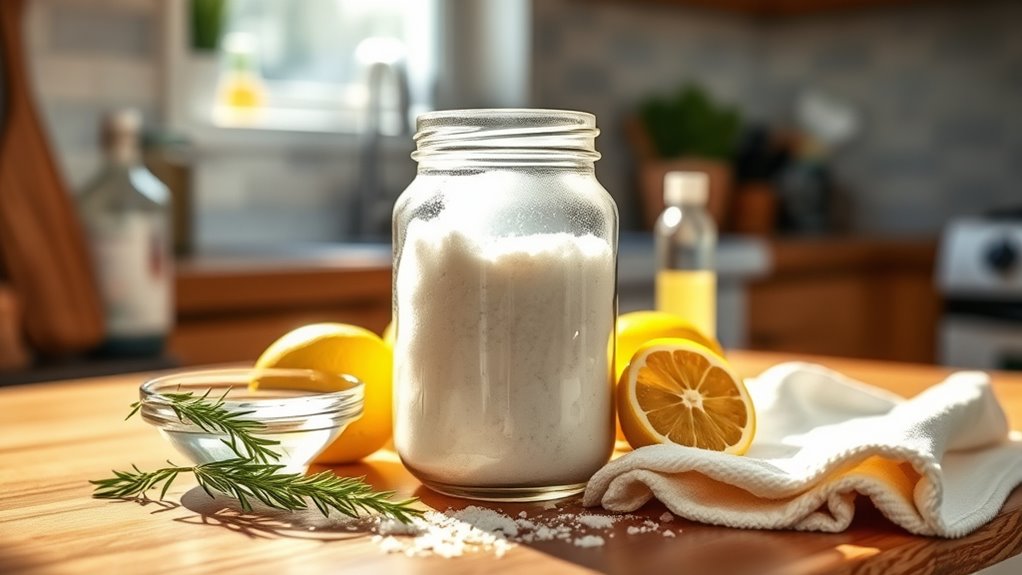
You can effectively eliminate odors using simple natural ingredients like baking soda and vinegar. Baking soda neutralizes smells by absorbing them, while vinegar works by absorbing and breaking down odor-causing molecules. These natural methods are easy, affordable, and safe for your home. Additionally, affiliate disclosure transparency about product recommendations helps you make informed choices.
Baking Soda’s Neutralizing Power
Baking soda is a natural and effective way to neutralize odors around your home. Its pH balancing properties help counteract acidic or alkaline smells, making it versatile for various areas. When you sprinkle baking soda, you’re not just covering odors—you’re actively neutralizing them. Its gentle abrasiveness also aids in stain removal, keeping surfaces fresh and clean. Imagine these scenarios:
- Sprinkling baking soda in your fridge to absorb lingering food smells
- Dusting it on carpets before vacuuming to eliminate pet odors
- Using it on upholstery to freshen fabric fibers
- Applying it to drains to neutralize unpleasant drain odors
- Leveraging AI-driven security systems to monitor and detect unusual activity for enhanced home safety.
This simple, affordable method effectively neutralizes odors and enhances cleanliness without harsh chemicals, making your home safer and more inviting.
Vinegar’s Odor Absorption
Vinegar is a powerful natural odor absorber that can eliminate stubborn smells without relying on harsh chemicals. It works by neutralizing odors at their source, making it an effective alternative to air fresheners. To use vinegar for odor elimination, simply place a bowl of white vinegar in the room or wipe surfaces with a vinegar solution. The vinegar absorbs and dissipates unpleasant smells, leaving your space smelling fresher. For best results, combine vinegar with other natural methods like baking soda or essential oils. Here’s a quick comparison:
| Method | How it Works | Best For |
|---|---|---|
| Vinegar | Absorbs and neutralizes odor | Kitchens, trash cans |
| Baking Soda | Neutralizes acids and odors | Carpets, refrigerators |
| Essential Oils | Mask and freshen | Air, fabrics |
Eco-Friendly Techniques for Kitchen and Bathroom Hygiene
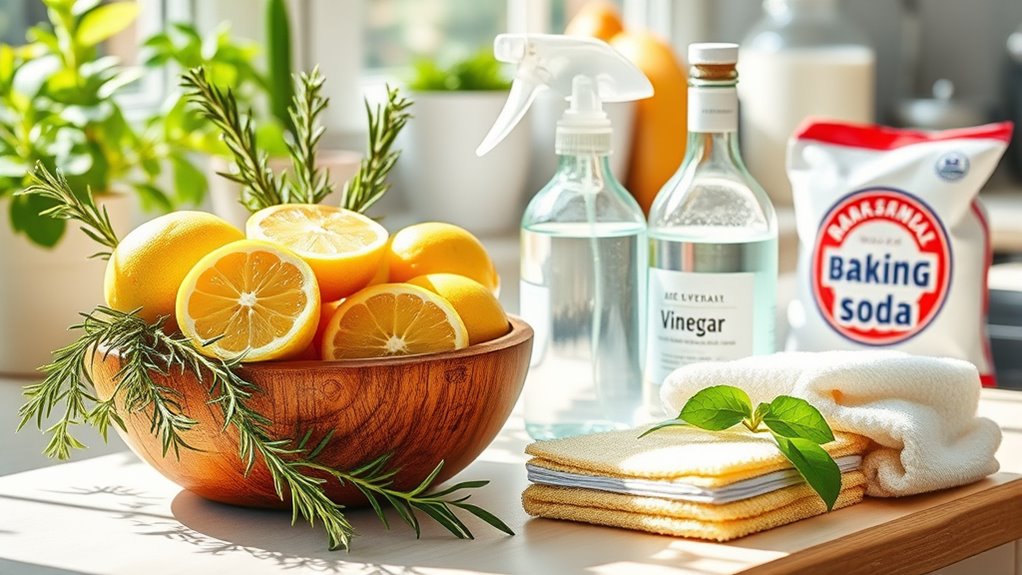
When it comes to maintaining a clean and healthy kitchen or bathroom, choosing eco-friendly techniques not only reduces your environmental impact but also creates a safer space for your family. You can start by selecting products in eco friendly packaging made from recycled materials. Opt for cleaning supplies from brands committed to sustainable sourcing, ensuring ingredients are responsibly harvested. Incorporate simple practices such as:
- Using baking soda and lemon for natural disinfecting
- Replacing disposable wipes with washable cloths
- Installing low-flow faucets to conserve water
- Using vinegar and essential oils as multipurpose cleaners
These methods cut down on harmful chemicals and waste, making your home healthier. Embracing eco-friendly techniques helps protect the environment while keeping your kitchen and bathroom spotless and safe for everyone.
Restoring and Maintaining Surfaces Safely

To restore and maintain surfaces safely, it’s essential to choose gentle, non-abrasive cleaners that won’t damage the material or leave harmful residues. Microfiber cloths are excellent tools because they trap dirt without scratching delicate surfaces. When cleaning wooden surfaces, avoid harsh chemicals; instead, use a mixture of water and a few drops of natural soap or vinegar. Always wipe in the direction of the grain to prevent scratches and maintain the wood’s finish. Regularly dust with microfiber cloths to prevent buildup and maintain shine. For stubborn spots, gently buff with a damp microfiber cloth. Avoid excessive moisture on wooden surfaces, and always dry thoroughly to prevent warping. With these simple steps, you’ll keep your surfaces looking fresh and protected naturally.
Natural Solutions for Carpet and Upholstery Care
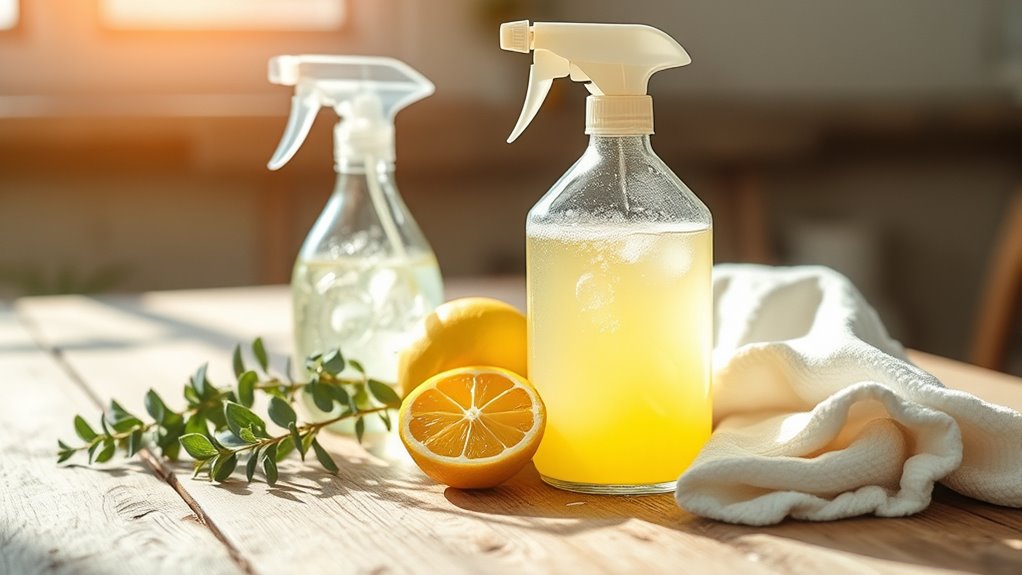
Natural solutions offer an effective way to clean and maintain your carpets and upholstery without exposing them to harsh chemicals. You can tackle pet stain removal and prevent fabric stains with simple, eco-friendly methods. Imagine:
Natural solutions effectively clean and protect your home without harsh chemicals.
- Blotting fresh pet accidents with a mixture of white vinegar and water to neutralize odors.
- Spraying a homemade solution of baking soda and essential oils to discourage pets from re-soiling.
- Using a gentle lemon juice and salt scrub to lift stubborn stains without damaging fibers.
- Applying a natural fabric protector, like beeswax-based sprays, to create an invisible barrier against spills and stains.
These solutions keep your home safe and fresh while protecting your investment in carpet and upholstery. Natural care is both effective and affordable.
Safety Tips and Best Practices for Natural Cleaning
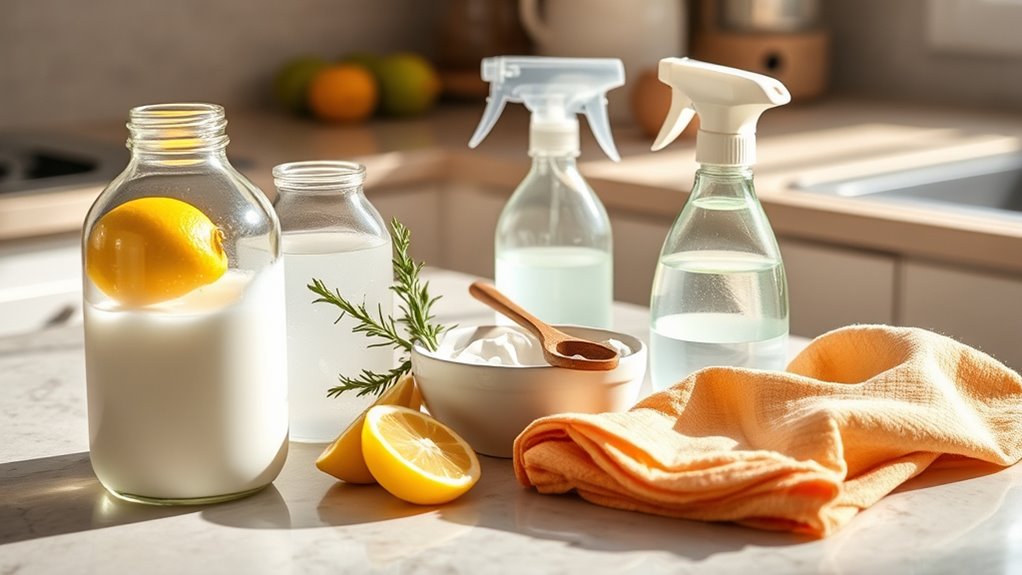
Practicing safety is essential whenever you use natural cleaning solutions to protect yourself, your family, and your home. Always wear protective gear like gloves and goggles to prevent skin irritation or eye contact, especially when handling concentrated or potent ingredients. Even natural solutions can cause allergic reactions or chemical safety concerns if misused. Keep your workspace well-ventilated to avoid inhaling strong scents or vapors. Store ingredients securely, away from children and pets. Read labels carefully, understanding any potential hazards. Remember, natural doesn’t mean risk-free. By following these safety tips and practicing proper chemical safety, you ensure effective cleaning without compromising your health or safety. Being cautious helps you enjoy the benefits of natural cleaning while minimizing any risks.
Frequently Asked Questions
Are Natural Cleaning Products as Effective as Commercial Ones?
Yes, natural cleaning products can be just as effective as commercial ones. Their natural efficacy often depends on the ingredients, like vinegar or baking soda, which target common stains and germs effectively. When comparing, you’ll find many natural options outperform commercial cleaners, especially for everyday cleaning tasks. Plus, they’re safer for your family and the environment. Give them a try, and you might be surprised by how well they work!
How Long Do Homemade Cleaners Typically Last?
Homemade cleaners usually last about one to two weeks, depending on ingredients. For the best shelf life, store them in airtight containers away from direct sunlight and heat. Use dark glass bottles if possible, as they protect the ingredients from light degradation. Label your containers with the date made, and shake well before each use. Regularly check for any changes in smell or appearance, and discard if you notice mold or a strange odor.
Can Natural Cleaners Be Used on Delicate or Specialty Surfaces?
Yes, natural cleaners can be used on delicate or specialty surfaces if you verify for delicate surface compatibility first. You should test a small, hidden area to confirm it doesn’t cause damage. For delicate surfaces like glass or hardwood, use gentle ingredients like diluted vinegar or mild soap. When cleaning specialty materials, choose specific natural solutions designed for those surfaces, avoiding harsh acids or abrasives that might cause harm.
Are There Any Safety Concerns With Using Essential Oils in Cleaning?
If you’re considering using essential oils in cleaning, safety is key. For example, someone with essential oil allergies might experience skin irritation or respiratory issues if they don’t use proper dilution. Always dilute essential oils properly and test a small area first. Be aware of potential allergies and avoid using highly concentrated oils on sensitive surfaces or around individuals with allergies, ensuring safe and effective cleaning.
How Do Natural Cleaning Methods Compare Environmentally to Chemical Cleaners?
You’ll find natural cleaning methods are much better for the environment compared to chemical cleaners. They typically offer a favorable biodegradability comparison, breaking down more easily without leaving harmful residues. Plus, they considerably reduce pollutants released into water and air, helping to protect ecosystems. By choosing natural options, you actively contribute to a cleaner planet, minimizing your ecological footprint while maintaining effective cleaning routines.
Conclusion
By mastering these natural cleaning basics, you’ll turn your home into a sparkling sanctuary without any harsh chemicals. Imagine banishing dirt, grime, and odors effortlessly—like a cleaning superhero! With just simple ingredients like vinegar, baking soda, and lemon, you’ll save money, protect your loved ones, and make your space shine brighter than ever before. Get ready to conquer messes with confidence and transform your home into a pure, fresh paradise!
Fall Picks
fall essentials
As an affiliate, we earn on qualifying purchases.