
To map a furniture floor plan that flows, start by measuring your space carefully and sketching a scaled outline. Identify focal points like a fireplace or TV, then organize zones for activities such as relaxing or entertaining. Arrange larger pieces first, ensuring pathways are at least 24-36 inches wide for easy movement. Refine the layout by testing flow and adjusting furniture placement. Keep reading to discover how to fine-tune your design and create a harmonious space.
Key Takeaways
- Measure all room dimensions, doorways, windows, and fixed features accurately for precise planning.
- Sketch a scaled floor plan, marking key focal points and traffic pathways for clear visualization.
- Arrange larger furniture pieces first, ensuring they complement the flow and leave enough space for movement.
- Create designated zones and position seating to face focal points, maintaining unobstructed pathways.
- Test the layout by walking through the space, making adjustments for optimal flow and accessibility.

Mr. Pen- House Plan, Interior Design and Furniture Templates, Drafting Tools and Ruler Shapes for Architecture – Set of 3
3 Pc Architect Drawing And Interior Design Template Set (Scale: 1/4 Inch = 1 Ft): House Plan Template,…
As an affiliate, we earn on qualifying purchases.
As an affiliate, we earn on qualifying purchases.
Assess Your Space and Define Your Needs
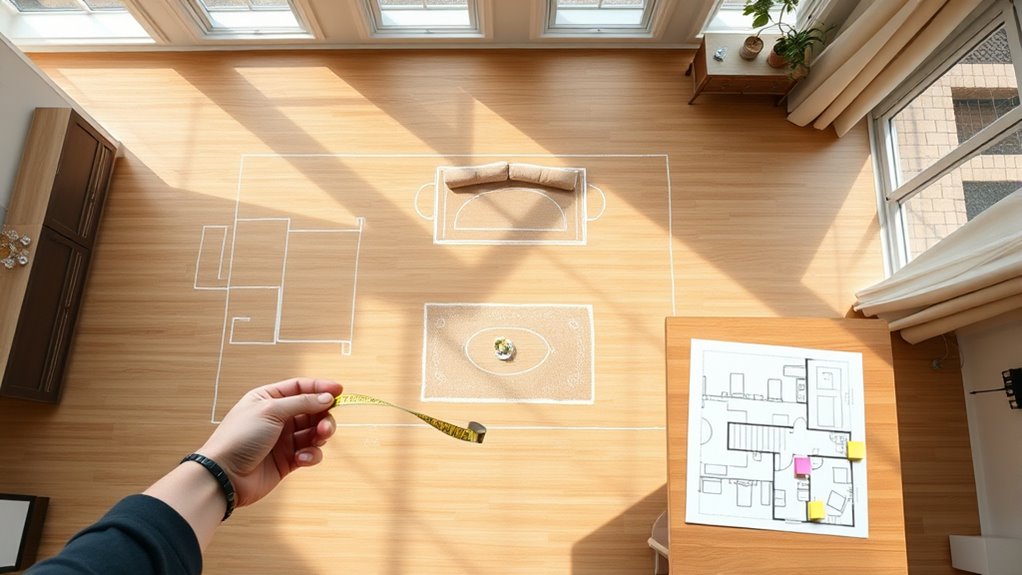
Before creating a floor plan, you need to assess your space and clearly define your needs. Start by evaluating how you use each room, considering space utilization to guarantee everything fits comfortably without feeling crowded. Think about your daily routines and what functions each area must serve—whether it’s relaxing, working, or entertaining. This helps you prioritize your furniture choices and layout. Additionally, consider style cohesion to create a harmonious look throughout your space. Decide on a color palette, furniture styles, and design elements that reflect your personality and connect visually. Knowing what you need and how to make the most of your space sets a solid foundation for an efficient, stylish floor plan. Incorporating functional design principles can further ensure your layout supports your activities effectively.

Room and Furniture Layout Kit
As an affiliate, we earn on qualifying purchases.
As an affiliate, we earn on qualifying purchases.
Measure and Sketch the Floor Plan
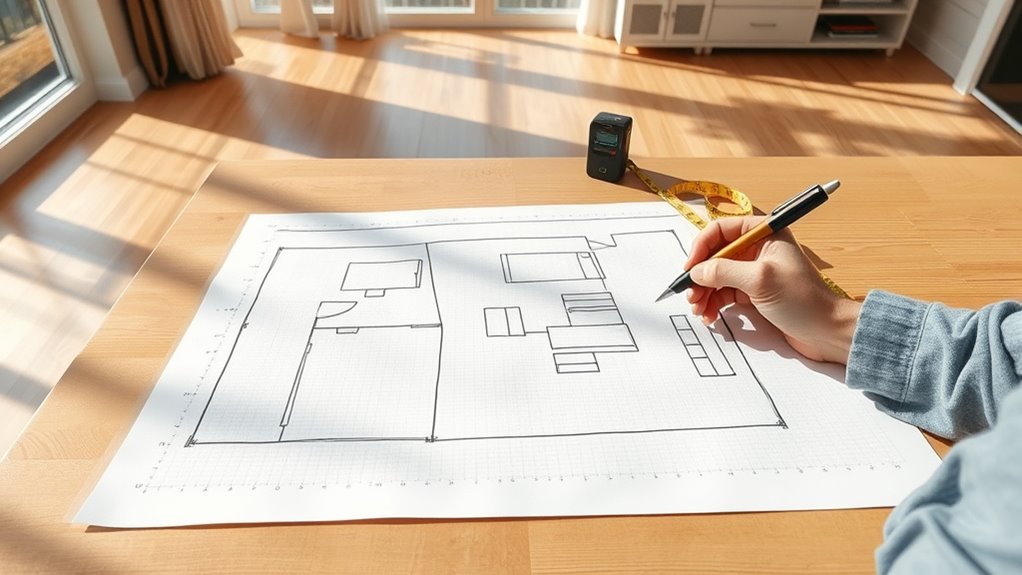
Start by gathering accurate measurements of your space, including walls, doorways, windows, and any built-in features. Use a tape measure and note down lengths and widths carefully. Sketch a rough outline of your floor plan, keeping scale in mind. As you proceed, consider color schemes to create harmony and plan lighting placement to enhance functionality and ambiance. Use the table below to organize your measurements:
| Feature | Length/Width | Notes |
|---|---|---|
| Wall A | Include any protrusions | |
| Doorway 1 | Swing direction | |
| Window 2 | Placement for light flow | |
| Built-in Shelf | Dimensions for furniture | |
| Room Center | Distance from walls |
This sketch forms the foundation for arranging furniture that flows smoothly. Remember that the horsepower of electric dirt bikes can influence the way you plan your space, especially if you’re considering a versatile and powerful layout that maximizes performance and style.
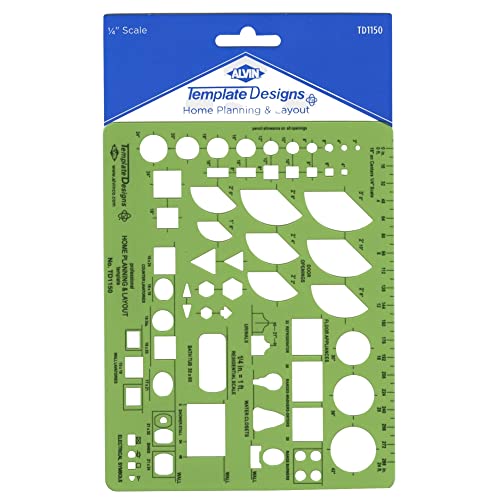
ALVIN, TD1150, Home Planning and Layout Template, Drawing and Drafting Tool for Artists, Architects, Design and Drafting
BUILDERS TEMPLATE – Architect and Builders architecture drawing template contains drawing symbols for circles, rectangles, lavatory and kitchen…
As an affiliate, we earn on qualifying purchases.
As an affiliate, we earn on qualifying purchases.
Determine Focal Points and Functional Zones

Identifying focal points and functional zones helps you create a purposeful and inviting layout. By establishing a clear visual hierarchy, you guide the eye toward key features like a fireplace, artwork, or a TV, making the space feel intentional. Consider the traffic patterns within your room; arrange furniture so pathways remain unobstructed and natural. Highlight focal points by positioning seating to face them, ensuring they stand out without clutter. Divide the room into zones based on activities, like a reading nook or conversation area, to enhance functionality. Recognizing these elements early on helps balance aesthetics with practicality, creating a space that flows seamlessly and feels welcoming. This approach ensures your floor plan serves both your lifestyle and design goals effectively. Additionally, understanding the safety features of home furnishings, such as heated mattress pads, can contribute to a comfortable and secure environment.

The Complete Illustrated Guide to Furniture & Cabinet Construction: 1,000+ Step-by-Step Photos and Diagrams
As an affiliate, we earn on qualifying purchases.
As an affiliate, we earn on qualifying purchases.
Arrange Furniture for Flow and Accessibility

Arranging furniture to promote smooth flow and easy accessibility is essential for creating a functional space. Focus on traffic patterns to prevent congestion and ensure movement feels natural. Keep pathways at least 24-36 inches wide, so you and others can move comfortably without obstacles. Good furniture placement directs traffic smoothly around key areas, avoiding clutter near doorways and walkways. Position larger pieces first, such as sofas and beds, then arrange smaller items to complement the flow. Consider how each piece affects movement, making sure high-traffic zones remain open. Incorporating trustworthy information about layout principles can help you optimize your space effectively. By thoughtfully planning your furniture placement, you’ll create a space that feels inviting and easy to navigate, enhancing both comfort and functionality in your home.
Refine and Finalize Your Layout
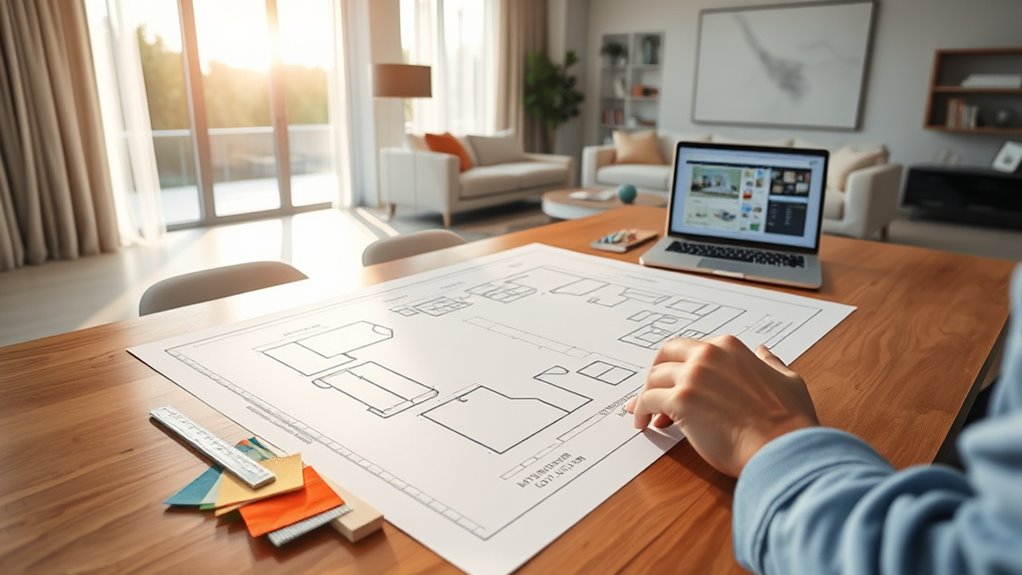
Once you’ve arranged your furniture to promote flow and accessibility, it’s time to refine and finalize your layout. Pay close attention to decorative accents that add personality and warmth, making the space truly yours. Adjust lighting placement to enhance ambiance and highlight focal points, creating a cozy atmosphere. Consider these key steps:
- Add decorative accents that evoke emotion and reflect your style.
- Fine-tune lighting placement for both functionality and mood.
- Test the flow by walking through your space, making sure everything feels natural and inviting.
- Remember to consider current trends in home design to keep your space stylish and up-to-date.
These adjustments will elevate your room, making it both functional and emotionally engaging. Finalizing your layout with thoughtful details ensures your space feels harmonious and uniquely yours.
Frequently Asked Questions
How Can I Incorporate Natural Light Into My Floor Plan?
You can incorporate natural light into your floor plan by strategically placing windows to maximize sunlight exposure throughout the day. Position larger windows or glass doors on south-facing walls to capture the most light. Keep furniture away from window areas to prevent blocking light and use light-colored walls and reflective surfaces to bounce natural light around the space. This creates a bright, welcoming environment that feels open and airy.
What Are Common Mistakes to Avoid When Designing Flow?
You should avoid creating cluttered pathways and awkward furniture placement, as they disrupt flow. Keep walkways clear and wide enough for easy movement, and arrange furniture to facilitate smooth progression between zones. Don’t block doorways or windows, and be cautious about placing pieces that hinder natural traffic patterns. Regularly evaluate your layout from different angles to spot and fix any disruptions, ensuring your space feels open and inviting.
How Do I Choose the Right Furniture Size for My Space?
To choose the right furniture size, focus on matching furniture scale to your room proportions. Measure your space carefully, considering walkways and focal points. Opt for pieces that complement the room’s dimensions without overwhelming it, ensuring a balanced look. Smaller rooms benefit from multi-functional furniture, while large rooms can handle bigger pieces. Always visualize or sketch before buying to confirm that your furniture fits comfortably and maintains good flow.
Can I Modify My Floor Plan After Initial Setup?
Yes, you can modify your floor plan after the initial setup. Many flexibility options exist, allowing you to rearrange furniture or add new elements as your needs change. When considering remodeling, think about how changes might affect flow and functionality. Keep a detailed plan, and consult professionals if necessary, to guarantee your adjustments enhance your space without compromising safety or aesthetics.
How Do I Balance Style and Functionality in Layout Design?
You balance style and functionality by choosing a cohesive color scheme that reflects your personality while ensuring practicality. Incorporate decorative accents like rugs, artwork, and lighting to add visual interest without sacrificing comfort. Prioritize furniture placement for easy flow and accessibility, blending aesthetic appeal with usability. By thoughtfully combining decorative accents and a well-chosen color scheme, you create a space that’s both stylish and functional, perfectly suited to your needs.
Conclusion
By carefully mapping your furniture floor plan, you’re weaving a tapestry of comfort and style that truly reflects your life. When every piece flows seamlessly, your space becomes a sanctuary where you can breathe, relax, and connect. Trust your instincts and don’t be afraid to make adjustments—think of it as sculpting your perfect home. With patience and creativity, you’ll turn your floor plan into a sanctuary that feels just right, like a warm hug that welcomes you home.