
When choosing between caulk and sealant, consider your project’s needs. Caulk is best for interior gaps and aesthetic finishes because it’s less flexible and easier to paint. Sealants are better for outdoor tasks or areas exposed to movement and moisture since they offer more flexibility and durability. Knowing the differences helps you select the right material. Continue exploring to discover how to apply them properly for long-lasting results.
Key Takeaways
- Use caulk for interior gaps around windows, sinks, and baseboards; sealant is better for outdoor, moving, or moisture-prone areas.
- Caulk is less flexible, ideal for static joints; sealants are more flexible, suitable for areas exposed to expansion and contraction.
- Choose caulk for aesthetic, low-movement applications; opt for sealant in harsh weather, high-moisture, or dynamic environments.
- Proper surface prep and application technique ensure durability and a tight seal for both caulk and sealant.
- Understanding material differences helps select the right product for specific needs, maximizing longevity and performance.
Differences in Composition and Properties

While caulk and sealant are often used interchangeably, they differ markedly in their composition and properties. Caulk typically contains latex, acrylic, or silicone, giving it a softer, more paintable nature. Sealants, on the other hand, usually have specialized chemical properties designed for durability and weather resistance, often incorporating polymers or silicone-based compounds. These chemical differences influence their flexibility: caulk is generally less flexible, making it suitable for interior applications where movement is minimal. Sealants usually offer greater flexibility, allowing them to accommodate expansion and contraction without cracking. This contrast in chemical properties and flexibility differences means each material is tailored for specific uses, with sealants excelling in harsh conditions and caulks fitting well into less demanding, aesthetic-focused tasks. Additionally, understanding credit card security measures is vital for protecting payment data in commerce-related applications.
Suitable Applications for Caulk and Sealant

Knowing the differences in composition and flexibility helps you choose the right material for your project, and understanding their suitable applications guarantees you get the best results. Caulk is ideal for sealing gaps and cracks in areas like windows, baseboards, and drywall, especially during DIY projects. Sealant, on the other hand, works better for flexible joints, outdoor sealing, and areas exposed to movement or moisture. Use caulk for interior projects such as sealing around sinks or bathtubs, and sealant for outdoor seasonal maintenance on gutters and siding. Keep in mind these applications to ensure longevity and effectiveness: proper sealing techniques include selecting the right product for the job.
Tips for Choosing and Applying the Right Material
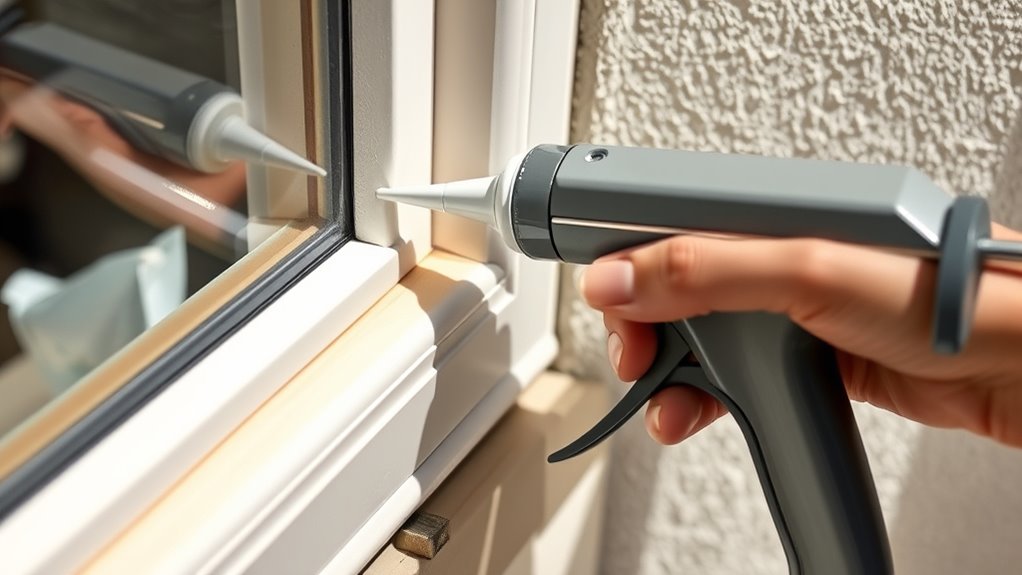
Choosing the right material starts with evaluating your project’s specific needs. Consider application techniques—smooth, controlled application guarantees a better seal and easier cleanup. For high-moisture areas, opt for a flexible sealant that withstands movement and moisture, enhancing material longevity. If you’re sealing a static gap, caulk with good adhesion and durability works well. Always clean and prep surfaces thoroughly to improve adhesion and longevity. Use the appropriate tools, such as a caulk gun for precise application. Apply in steady, even strokes, and smooth the material with a wet finger or tool for a neat finish. Proper technique not only ensures a tight seal but also prolongs the lifespan of the material, saving you time and money in the long run. Additionally, understanding the contrast ratio of your projector can significantly impact your viewing experience by providing deeper blacks and brighter highlights, especially in dark scenes.
Frequently Asked Questions
Can Caulk and Sealant Be Painted Over?
Yes, you can paint over caulk and sealant, but it depends on the product. Some caulks and sealants have paintability issues, so check the label first. To guarantee good adhesion, you need proper surface preparation, which includes cleaning and drying the area thoroughly. If the product isn’t paintable, it may crack or peel over time. Using a paintable sealant simplifies this process and guarantees a smooth, durable finish.
How Long Do Caulk and Sealant Typically Last?
Time tells the tale of caulk and sealant’s toughness, lasting from 5 to 50 years depending on durability factors. You’ll find that silicone sealants often outperform acrylic caulks, standing stronger in wet environments. Temperature changes, exposure to elements, and application quality all influence longevity. Regular inspections help catch cracks or wear early, ensuring your sealing stays secure and your space stays sealed longer.
Are There Environmental Differences Between Caulk and Sealant?
You’ll notice environmental differences between caulk and sealant, especially regarding eco-friendliness and VOC emissions. Sealants often contain higher VOC levels, which can impact indoor air quality and contribute to pollution. Caulks made with low or zero VOCs are more environmentally friendly and safer for your family and the environment. When choosing, check product labels for eco certifications to guarantee you pick options that minimize harmful emissions and are better for the planet.
Can I Use Sealant Outdoors or Only Indoors?
You can definitely use sealant outdoors, as it’s designed for outdoor durability and weather resistance. Unlike indoor sealants, outdoor sealants withstand rain, temperature fluctuations, and UV exposure. They stay flexible, prevent leaks, and resist cracking over time. So, if you need a reliable seal in outdoor projects, choose a sealant formulated for weather resistance, ensuring your job remains protected against the elements for years to come.
Is One Material More Cost-Effective Than the Other?
Sealant generally costs more upfront than caulk, but it lasts longer and offers better flexibility, reducing the need for frequent replacements. If you’re working within a tight budget, caulk provides a cost-effective option, especially for small projects or areas needing less durability. Consider your budget considerations and the specific needs of your project; investing a bit more in sealant may save you money over time.
Conclusion
So, next time you’re sealing gaps, remember: choosing the wrong one might just turn your perfect finish into a sticky mess or a leaky disaster. It’s almost poetic—your home’s protection resting on a tiny tube of caulk or sealant. Ironically, the very materials meant to shield you could become the source of your biggest headache. So, pick wisely, and avoid turning your DIY project into a comedy of errors.