To quiet your home, start by sealing gaps and cracks around doors, windows, and walls with acoustical caulk and weatherstripping. Add heavy curtains and install window inserts to block noise leaks. Incorporate soft furnishings like rugs and cushioned furniture to absorb sounds. Consider mounting acoustic panels or foam tiles on walls and ceilings. Reinforce doors and walls for extra soundproofing, and use white noise machines to mask residual noise. Keep exploring these easy tricks for a quieter home environment.

Get furniture and decor delivered free with Prime
- Fast, free delivery on millions of items
- Prime Video, Amazon Music and more included
- Member-only deals all year
Key Takeaways
- Seal gaps around doors, windows, and walls with acoustically rated caulk and door sweeps to prevent sound leaks.
- Use heavy curtains, window inserts, and soft furnishings like rugs to absorb sound and reduce echo.
- Install acoustic panels or foam tiles on walls and ceilings for targeted noise absorption.
- Place soundproofing devices such as white noise machines near noise sources and at ear level for effective masking.
- Reinforce walls with dense drywall or insulation to minimize noise transfer through structural barriers.
acoustical caulk for soundproofing
As an affiliate, we earn on qualifying purchases.
As an affiliate, we earn on qualifying purchases.
Seal Gaps and Cracks to Block Noise
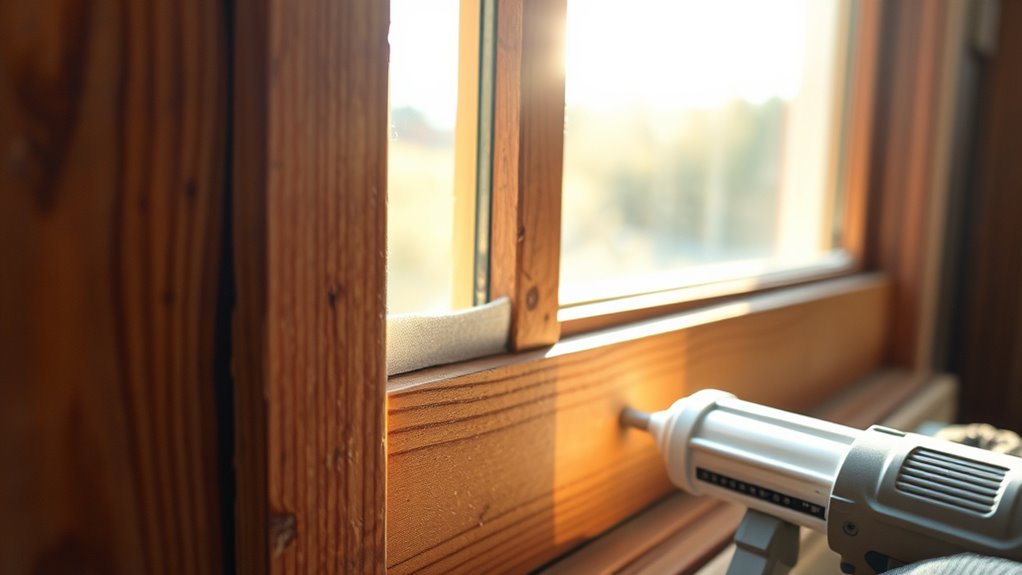
Sealing gaps and cracks is one of the simplest and most effective ways to block noise from entering or escaping a room. Start by installing door seals around the edges of your doors to create a tight barrier. These seals prevent sound leaks through gaps underneath or around the door frame. Use proper caulking techniques to seal cracks in walls, window frames, and baseboards. Apply a high-quality, acoustically rated caulk to fill in gaps and prevent sound from passing through tiny openings. Make sure to press the caulk firmly into the cracks and smooth it out for a seamless finish. Proper soundproofing techniques can further enhance your space’s noise reduction. These small steps markedly improve soundproofing, making your space quieter without major renovations. Consistent sealing keeps noise where it belongs—outside or inside—where it won’t disturb your peace.
Use Heavy Curtains and Window Inserts

Heavy curtains and window inserts are effective tools for reducing noise transmission through your windows. Thick, dense curtains act as an extra layer of wall insulation, absorbing sound and preventing it from entering your space. Consider pairing them with double glazing windows, which considerably cut down noise from outside. Window inserts, such as acrylic or foam panels, are easy to install and enhance soundproofing by creating a sealed barrier. These additions work together to minimize sound leaks, especially when installed over existing windows. Using soundproofing materials can further improve the effectiveness of your window treatments. Making your windows less permeable to sound helps create a quieter home environment. Combining heavy curtains with window inserts is a practical way to boost your window’s soundproofing without major renovations, providing immediate relief from noisy surroundings.
Add Soft Furnishings to Absorb Sound
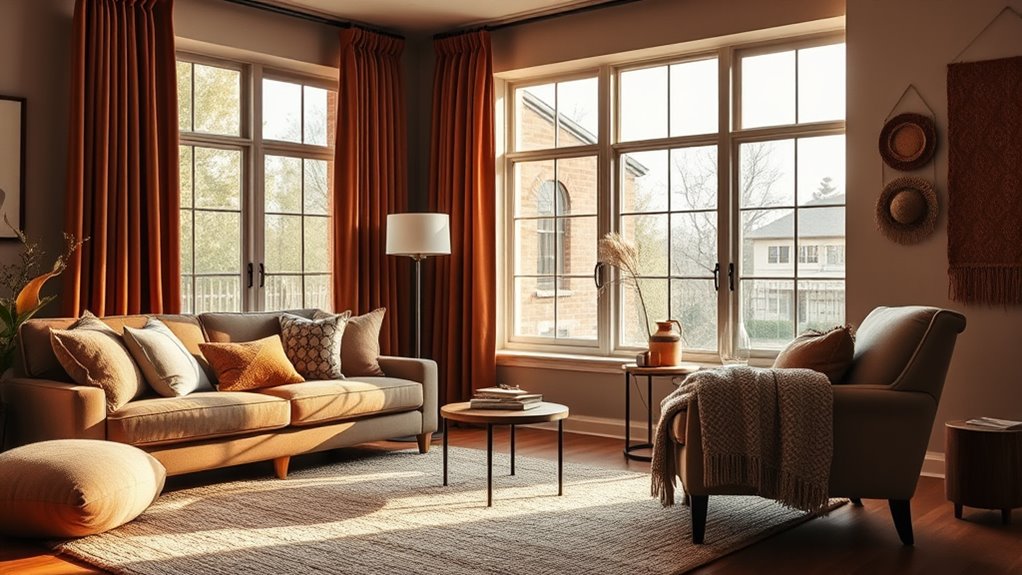
Adding soft furnishings like plush rugs and cushioned curtains can markedly reduce noise levels in your space. These items absorb sound waves, making your environment quieter and more comfortable. Consider upgrading your decor with these elements to enhance your soundproofing efforts. For an extra boost, incorporating sound-absorbing materials like acoustic panels or specialized curtains can further diminish noise transmission.
Use Plush Rugs
Plush rugs are an effective way to dampen sound in your space because their thick fibers absorb echoes and reduce noise transmission. They act as floor insulation, preventing sound from bouncing around and escaping through the floor. Placing a plush rug in high-traffic areas can substantially lower overall noise levels. Additionally, rugs help to buffer sound that travels through gaps around door sweeps, making rooms quieter. To maximize soundproofing, choose rugs with dense, dense pile that absorbs more sound. Regularly vacuuming keeps fibers plush and effective. Using sound-absorbing materials like plush rugs in combination with other soundproof measures such as sealing gaps around door sweeps enhances your home’s acoustic comfort. This simple addition makes a noticeable difference in creating a quieter, more peaceful environment.
Incorporate Cushioned Curtains
Incorporating cushioned curtains into your space can considerably improve sound absorption by softening the impact of noise coming through windows and walls. These window treatments add an extra layer of acoustic insulation, minimizing sound transmission and creating a quieter environment. Cushioned curtains are especially effective in rooms where external noise or echoes are a problem. They not only serve as stylish accents but also enhance your home’s acoustic profile. To maximize their impact, choose thick, layered fabrics that absorb sound effectively. Pairing them with other soft furnishings boosts overall noise reduction. Additionally, selecting materials such as recycled fabrics can provide sustainable benefits along with improved soundproofing. Below is a quick comparison:
| Feature | Benefits |
|---|---|
| Thickness | Better sound absorption |
| Material | Increased acoustic insulation |
| Style | Enhances decor |
| Placement | Optimal noise reduction |
Install Acoustic Panels or Foam Tiles

Have you considered installing acoustic panels or foam tiles to block out unwanted noise? These are effective tools for acoustic treatment, helping to improve sound absorption in your space. Acoustic panels and foam tiles absorb sound waves, reducing echo and minimizing noise transfer between rooms. You can place them on walls, ceilings, or around noisy appliances for excellent results. The key is to select the right type and placement to target specific sound issues. Foam tiles are lightweight and easy to install, making them ideal for DIY projects. Acoustic panels, often more stylish, can blend seamlessly with your decor while providing significant noise reduction. Additionally, understanding sound absorption principles can help you optimize your setup for a quieter environment. By adding these materials, you create a quieter, more peaceful environment without extensive renovations.
Reinforce Doors and Walls
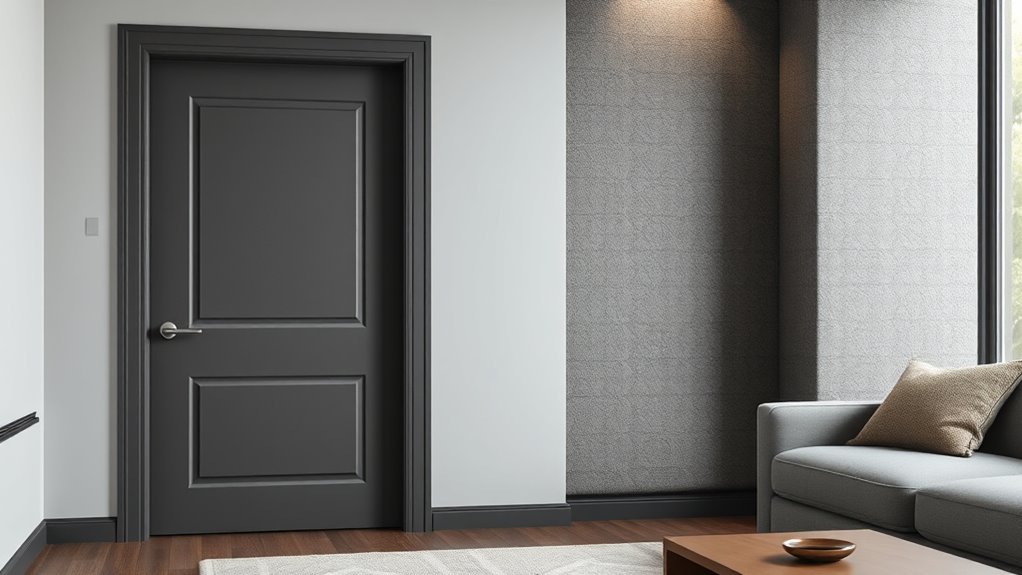
Reinforcing doors and walls is a highly effective way to block out unwanted noise and improve your space’s soundproofing. To achieve this, focus on door reinforcement and wall insulation. Here are key steps:
Reinforcing doors and walls effectively reduces noise and enhances privacy.
- Install a solid core door or add a door sweep to seal gaps.
- Use acoustic door seals around the edges to prevent sound leaks.
- Add mass-loaded vinyl or dense drywall for wall insulation.
- Fill wall cavities with mineral wool or fiberglass insulation to dampen sound transmission.
- Understanding soundproofing techniques can help you select the most effective methods for your needs.
These measures help create a barrier that reduces noise penetration. Reinforcing doors and walls not only minimizes sound transfer but also enhances the overall privacy and comfort of your space. Proper door reinforcement and wall insulation are essential in soundproofing effectively.
Incorporate White Noise Machines and Sound Masking
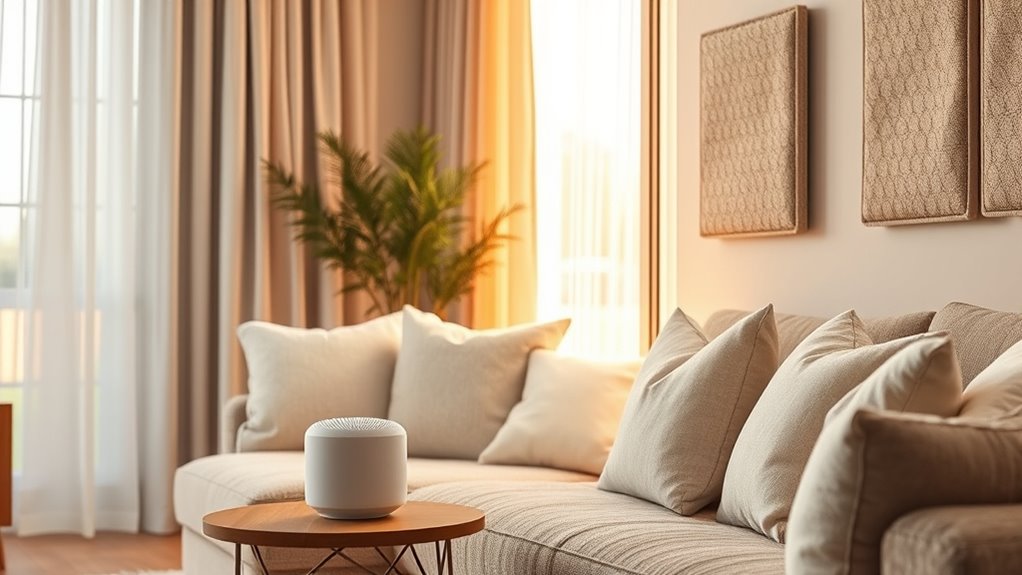
Choosing the right white noise machine is essential to effectively mask unwanted sounds. You should consider factors like volume options and sound types to find the best fit for your space. Proper placement, such as near noise sources or away from your main listening area, can maximize its effectiveness. Additionally, selecting a model with noise level control ensures that the machine can operate quietly enough not to disturb your sleep or concentration.
Choosing the Right Machine
Selecting the right soundproofing machine is essential for creating a quiet environment, whether you’re trying to block out external noise or mask internal sounds. To choose effectively, start by identifying your noise source. Next, consider these factors:
- Type of noise – Is it constant or sporadic? White noise machines work best for consistent sounds.
- Sound quality – Look for machines with adjustable volume and tone controls.
- Compatibility with soundproofing materials – Some devices complement certain materials better, enhancing overall noise reduction.
- Ease of use and size – Make sure it fits your space and is user-friendly.
- Integration with sound masking – Combining sound masking with soundproofing can significantly improve the effectiveness of your noise reduction strategy.
Optimal Placement Tips
Once you’ve picked the right soundproofing machine, placing it correctly can considerably boost its effectiveness. Position your white noise machine or sound masking device near the source of noise or where you spend most of your time. Use furniture positioning to help amplify the sound, placing the machine behind or beside soft furnishings like sofas or curtains to absorb and diffuse noise better. When it comes to speaker placement, avoid placing them directly against walls or in corners, which can cause sound distortion. Instead, position them at ear level and slightly away from reflective surfaces to ensure the sound spreads evenly. Proper placement ensures your sound masking system works efficiently, creating a consistent, calming background noise that effectively blocks unwanted sounds.
Frequently Asked Questions
How Do I Identify the Most Common Noise Leaks in My Home?
To identify the most common noise leaks in your home, start by actively inspecting structural gaps around windows, doors, and outlets. Listen carefully to pinpoint where sounds are coming through, and check for cracks or openings during different times of day. You can also use a flashlight to spot light leaks, which often correlate with sound leaks. Identifying noise sources and inspecting these gaps helps you target the areas needing soundproofing.
Are There Budget-Friendly Soundproofing Options for Renters?
Yes, you can find budget-friendly soundproofing options as a renter. Try DIY solutions like sealing gaps with weatherstripping or using draft stoppers on doors and windows. Temporary fixes such as hanging heavy curtains or adding rugs can also absorb sound. These methods are affordable, non-permanent, and easy to implement, helping you reduce noise without risking your security deposit. They’re effective ways to create a quieter, more comfortable home environment.
Can Outdoor Noise Be Effectively Reduced With Indoor Solutions?
Yes, you can effectively reduce outdoor noise with indoor solutions. Start by installing outdoor noise barriers like thick curtains or plants near windows. Seal gaps with window sealing to block sound leaks. Using heavy, sound-absorbing furniture and rugs inside also helps dampen noise. These strategies won’t eliminate all sound but can considerably cut down outdoor disturbances, making your space much quieter and more comfortable.
How Long Does Soundproofing Typically Take to Show Noticeable Results?
You’ll usually see noticeable results within a few days to a week, depending on your soundproofing methods. The soundproofing timeline varies based on the materials and techniques you choose, but with consistent effort, you should notice a reduction in noise levels fairly quickly. Keep in mind, some improvements may take longer to fully realize, especially if you’re tackling large or complex areas. Patience guarantees the best results.
Will Adding Soft Furnishings Affect the Room’s Overall Décor?
Adding soft furnishings can beautifully blend with your décor while improving soundproofing. Think plush rugs, fabric textures, and decorative accents that soften your space’s look and sound. These items subtly absorb noise without clashing with your style. You’ll find that enhancing comfort doesn’t mean sacrificing aesthetics—in fact, it can create a cozy, inviting atmosphere that’s both stylish and acoustically friendly.
Conclusion
Quieting your home quickly calls for clever, cost-effective, and creative tricks. By sealing squeaky gaps, softening surfaces, and strengthening structures, you create a calmer, more comfortable space. Incorporate insulation, inserts, and innovative noise-masking devices to make your home hush-hush. With a little effort and these effective soundproofing strategies, you’ll enjoy a peaceful, private haven where you can relax, recharge, and revel in restful silence. Silence truly starts with smart solutions—so start soundproofing today!
Columbus Day / Indigenous Peoples' Day Picks
long weekend sales
As an affiliate, we earn on qualifying purchases.