
To help your furnishings last, make sure you keep indoor air clean by using air purifiers with HEPA filters and ensuring proper ventilation. Maintain humidity levels between 30% and 50% with humidifiers or dehumidifiers as needed; this prevents mold, mildew, and cracking. Regularly assess air quality and moisture, and clean surfaces frequently to reduce dust and allergens. Keep these tips in mind, and you’ll discover more ways to protect your home’s comfort and longevity.

Get furniture and decor delivered free with Prime
- Fast, free delivery on millions of items
- Prime Video, Amazon Music and more included
- Member-only deals all year
Key Takeaways
- Maintain indoor humidity between 30% and 50% to prevent mold, mildew, and furniture damage.
- Use HEPA air purifiers and proper ventilation to reduce airborne pollutants and allergens.
- Regularly clean surfaces and replace HVAC filters to ensure clean, pollutant-free air circulation.
- Monitor humidity levels with hygrometers and adjust with dehumidifiers or humidifiers as needed.
- Implement proactive maintenance like using exhaust fans and environmental monitoring devices for optimal air quality.
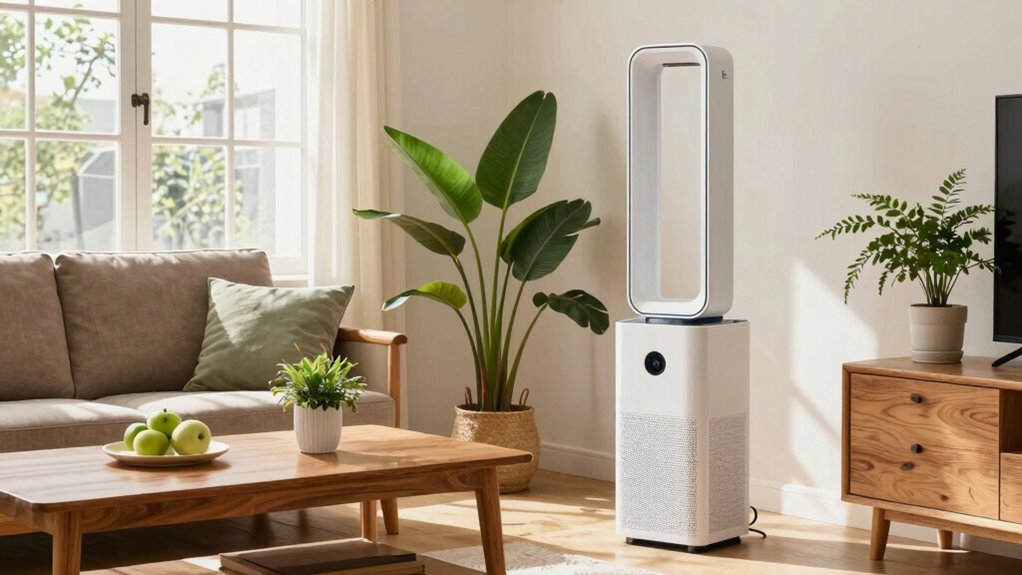
Maintaining a healthy indoor environment hinges on balancing clean air with proper moisture levels. When you focus on air quality, you improve not just your comfort but also the longevity of your furnishings. Clean air means fewer pollutants, dust, and allergens circulating through your space, which helps prevent buildup that can damage surfaces and fabrics over time. Humidity control plays a critical role here because excessive moisture encourages mold, mildew, and dust mites, all of which can deteriorate furniture and textiles. Conversely, too little humidity can cause wood to crack, paint to peel, and paper-based materials to become brittle. Striking the right balance ensures your environment remains healthy and your furnishings stay in top shape.
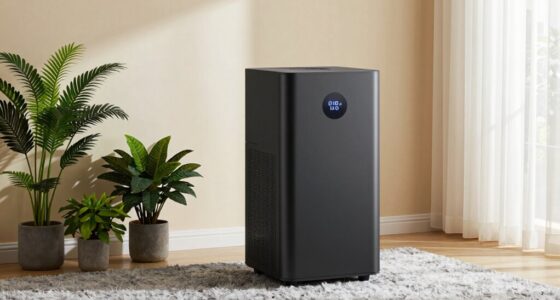
To enhance air quality, you should prioritize proper ventilation and regular cleaning. Using air purifiers with HEPA filters helps trap airborne particles, keeping dust, pet dander, and pollen out of your living space. Opening windows when weather permits also introduces fresh air, diluting indoor pollutants. Additionally, maintaining HVAC systems and replacing filters regularly is essential for continuous clean air circulation. These small steps reduce the presence of contaminants that can settle on furniture and surfaces, prolonging their lifespan and keeping your living environment fresh. Regularly monitoring indoor air quality can help you stay on top of pollutants and take timely action. Incorporating air quality monitoring devices provides real-time data, empowering you to make informed decisions about your indoor environment. Implementing proper ventilation strategies further enhances air circulation and reduces stale, polluted air from accumulating.
Humidity control is equally important. You can achieve this by monitoring indoor moisture levels with a hygrometer, ensuring they stay within the ideal range of 30% to 50%. When the air is too humid, consider using dehumidifiers to remove excess moisture that could foster mold growth or warp wooden furniture. On the flip side, when the air feels dry, especially in winter, using humidifiers adds moisture to prevent cracking or splitting of wooden items and upholstery. Proper humidity levels also make the air feel more comfortable, reducing static electricity and skin irritation. Maintaining an ideal humidity range helps prevent environmental damage and supports overall comfort.
Creating this balance is not a one-time effort but an ongoing process. Regularly assess your indoor air quality and humidity, adjusting your strategies as needed. Keep furniture and surfaces clean to avoid dust accumulation, which can trap moisture and pollutants. Use exhaust fans in kitchens and bathrooms to remove excess moisture and pollutants generated during cooking or bathing. Incorporating air quality monitoring devices and humidity sensors can further assist in maintaining optimal conditions. By consistently managing air quality and humidity, you help prevent damage caused by environmental factors, which ultimately extends the life of your furnishings. This proactive approach ensures your home remains a healthy, comfortable space where your belongings stay pristine longer.
Products Worth Considering

LEVOIT Vital 100S-P Smart Air Purifier with Washable Pre-Filter

Levoit Vital 200S-P Smart Air Purifier for Large Rooms

Levoit Core 600S-P Smart Air Purifier for Large Rooms
As an affiliate, we earn on qualifying purchases.
Frequently Asked Questions
How Does Humidity Affect Different Types of Furniture Materials?
Humidity impacts furniture by causing wood to expand and contract, which can lead to cracks and warping. For fabric furniture, high humidity encourages mold growth, damaging your belongings and affecting air quality. Maintaining proper humidity levels prevents wood from excessive expansion and reduces the risk of fabric mold. You should monitor indoor moisture carefully, use dehumidifiers if needed, and guarantee good ventilation to keep your furnishings in top condition.
Can Air Purifiers Improve Furniture Longevity?
Yes, air purifiers can improve furniture longevity by reducing airborne pollutants and allergens that cause damage. Proper air filtration keeps dust, pet dander, and mold spores at bay, which helps preserve your furniture’s materials. Regular purifier maintenance ensures peak performance, preventing buildup that could diminish air quality. By maintaining a cleaner environment, you protect your furnishings from deterioration, extending their lifespan and keeping your space healthier overall.
What Are Common Sources of Indoor Excess Moisture?
Imagine you’re in a Victorian mansion—excess moisture often comes from daily activities like cooking, bathing, and drying clothes indoors. Poor ventilation worsens this, trapping humidity and encouraging mold growth. To prevent this, improve ventilation, use exhaust fans, and keep windows open when weather permits. These steps help balance indoor moisture, protecting your furnishings from mold and damage, and ensuring a healthier, more comfortable living space.
How Often Should I Monitor Indoor Humidity Levels?
You should check your indoor humidity levels weekly using humidity sensors to guarantee ideal balance. Regular monitoring helps you detect excess moisture early, preventing damage to furnishings. Also, perform dehumidifier maintenance monthly—clean filters and check for leaks—to keep it running efficiently. Maintaining consistent humidity not only protects your belongings but also promotes healthier indoor air quality, making your living space more comfortable and preserving your furnishings longer.
Are There Specific Cleaning Products That Help Maintain Air Quality?
Think of cleaning products as guardians of your indoor air quality, fighting off pollutants and allergens. Look for products labeled as low-VOC or eco-friendly, which help maintain a healthier environment. Avoid harsh chemicals that can compromise air quality and irritate your respiratory system. Regularly using gentle, natural cleaning products supports a fresh, clean space, ensuring your furnishings last longer and your air stays pure and breathable.
Conclusion
Keeping the air clean and moisture balanced is like tuning a delicate instrument—you guarantee every note resonates perfectly. When you master this harmony, your furnishings breathe easier, lasting longer and shining brighter. Think of your home as a lush garden, thriving with just the right amount of water and fresh air. By nurturing this balance, you create a sanctuary where beauty and durability flourish, turning everyday spaces into timeless havens of comfort.