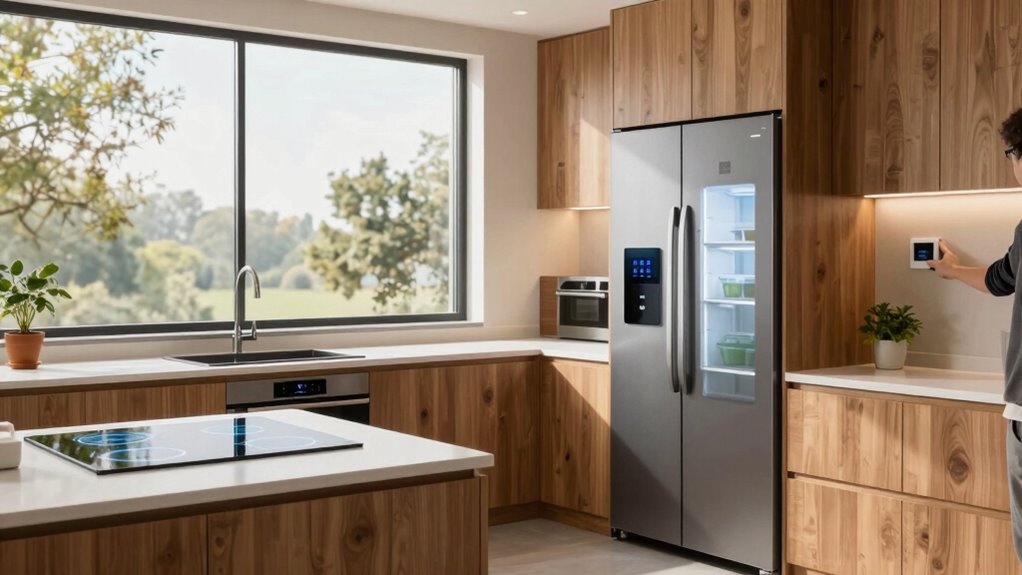

To build a more energy-aware kitchen, focus on upgrading to smart appliances that monitor and optimize energy use, like refrigerators and ovens. Use efficient LED lighting with motion sensors or timers to reduce waste. Regularly maintain appliances by cleaning coils and descaling machines to improve performance. Incorporate energy monitoring systems to track consumption and identify costly habits. Staying informed about new technologies and strategies helps maximize savings. Keep exploring for more tips to make your kitchen truly sustainable.

Get furniture and decor delivered free with Prime
- Fast, free delivery on millions of items
- Prime Video, Amazon Music and more included
- Member-only deals all year
Key Takeaways
- Incorporate smart appliances with energy-saving features and maintain them regularly for optimal performance.
- Install energy-efficient lighting like LEDs with sensors and maximize natural light.
- Use remote controls and scheduling to run appliances during off-peak hours and prevent waste.
- Implement energy monitoring systems to track consumption and identify major power users.
- Educate household members on best practices for energy conservation and efficient appliance use.

Creating an energy-aware kitchen starts with understanding how your everyday choices can reduce your environmental impact and save you money. One of the best ways to start is by investing in smart appliances. These devices are designed to optimize energy use, so you’re not wasting electricity on unnecessary functions. For example, smart refrigerators can monitor their contents and adjust cooling settings accordingly, reducing energy consumption. Similarly, smart ovens and dishwashers have sensors that determine the perfect cycle length, ensuring you’re not overusing energy. When shopping for appliances, look for those with high energy star ratings, as they meet strict efficiency standards and can substantially cut your energy bills over time.
Alongside smart appliances, switching to energy-efficient lighting is a simple yet effective step. Traditional incandescent bulbs consume a lot of electricity and burn out quickly, but energy-efficient options like LED or CFL bulbs use a fraction of the energy and last much longer. Installing LED lighting in your kitchen not only reduces your energy consumption but also provides bright, consistent illumination, making cooking and cleaning safer and easier. Consider using motion sensors or timers for under-cabinet and ceiling lights to guarantee they’re only on when needed, further minimizing waste. Incorporating natural light during the day can also make a huge difference—keep window treatments minimal or use reflective surfaces to bounce daylight around the room.
Automation plays an essential role in creating an energy-aware kitchen. Many smart appliances can be programmed or controlled remotely via smartphone apps, allowing you to turn devices on or off without wasting energy. For instance, you can preheat your oven just before you arrive home or set your dishwasher to run during off-peak hours when electricity is cheaper. This level of control helps you avoid leaving appliances running unnecessarily, which can add up in energy savings over time. Additionally, maintaining your appliances properly—like cleaning refrigerator coils or descaling coffee machines—ensures they operate efficiently. Regular maintenance is key to efficiency, and staying informed about new energy-saving technologies can further enhance your efforts. Properly maintaining your appliances not only prolongs their lifespan but also helps you identify opportunities for additional energy reductions.
Finally, integrating energy monitoring systems can give you real-time feedback on your energy use. These systems help identify which appliances or habits consume the most power, so you can adjust accordingly. By combining smart appliances, energy-efficient lighting, and thoughtful habits, you create a kitchen that’s not only more sustainable but also more cost-effective. Every small change adds up, making your kitchen a model of energy efficiency and environmental responsibility.
smart energy-efficient refrigerator
As an affiliate, we earn on qualifying purchases.
As an affiliate, we earn on qualifying purchases.
Frequently Asked Questions
What Are the Most Energy-Efficient Appliances for a Kitchen?
You should choose appliances with high energy efficiency, and check their labels for ENERGY STAR certification. Smart gadgets like smart thermostats or smart dishwashers help optimize energy use by adjusting settings automatically. These appliances not only save power but also provide convenience. Always compare appliance labels and look for the most energy-efficient options to reduce your energy bills and environmental impact, making your kitchen more sustainable and cost-effective.
How Can I Reduce Water Usage in My Kitchen?
You can reduce water usage in your kitchen by practicing water conservation and leak prevention. Fix any leaks promptly to prevent wastage. Use water-efficient fixtures like low-flow faucets and aerators, and only run dishwashers and sinks when full. Avoid pre-rinsing dishes unnecessarily, and consider washing produce in a bowl of water instead of under running water. These steps help conserve water, save money, and promote eco-friendly habits.
Are There Affordable Ways to Improve Kitchen Insulation?
Yes, you can improve your kitchen insulation affordably by using effective insulation materials like foam boards or reflective foil to seal gaps around windows, doors, and outlets. Adding weatherstripping or draft stoppers is a simple upgrade that reduces heat loss. You might also consider insulating your pipes or installing thermal curtains. These affordable upgrades help maintain a consistent temperature, saving energy and lowering your utility bills.
How Does Lighting Affect Energy Consumption in the Kitchen?
Poor lighting design can quietly increase your energy bills, making your kitchen less efficient. By maximizing natural illumination and choosing energy-efficient bulbs, you considerably reduce energy consumption. Thoughtful placement of fixtures and the use of dimmers let you control lighting levels, saving power without sacrificing ambiance. Embracing natural light not only cuts costs but also creates a more inviting space. Small adjustments in your lighting choices make a big difference in your kitchen’s energy footprint.
What Are Some Eco-Friendly Kitchen Renovation Tips?
To make your kitchen more eco-friendly, choose sustainable countertop options like bamboo or recycled glass, which reduce environmental impact. Incorporate eco-friendly kitchen decor, such as reclaimed wood cabinets or low-VOC paints, to enhance sustainability. You can also upgrade to energy-efficient appliances and install LED lighting. These steps help lower your carbon footprint, save energy, and create a stylish, environmentally conscious space you’ll love spending time in.
Conclusion
By making small changes, like switching to energy-efficient appliances or smart lighting, you can turn your kitchen into a powerhouse of sustainability. Think of it as tending a garden—you plant the seeds of awareness today, and over time, they blossom into a more sustainable, cost-saving space. Just like a single seed can grow into something beautiful, your efforts now can lead to a brighter, greener future for your home and the planet.
Halloween Picks
halloween
As an affiliate, we earn on qualifying purchases.