TL;DR

Get furniture and decor delivered free with Prime
- Fast, free delivery on millions of items
- Prime Video, Amazon Music and more included
- Member-only deals all year
Vagabond Haven has introduced the Nature Pod, a small, mobile cabin built with ThermoWood and featuring a large rear panorama window. It can be ordered as a DIY kit or fully finished, designed for off-grid living or as a scenic retreat.
Vagabond Haven, a Swedish manufacturer, has announced the release of the Nature Pod, a 6-meter (about 19’8”) mobile cabin designed to maximize views with a large rear panorama window. The cabin can be ordered as a DIY kit starting around €5,000 or as a fully finished, off-grid-ready retreat, emphasizing its adaptability and scenic appeal.
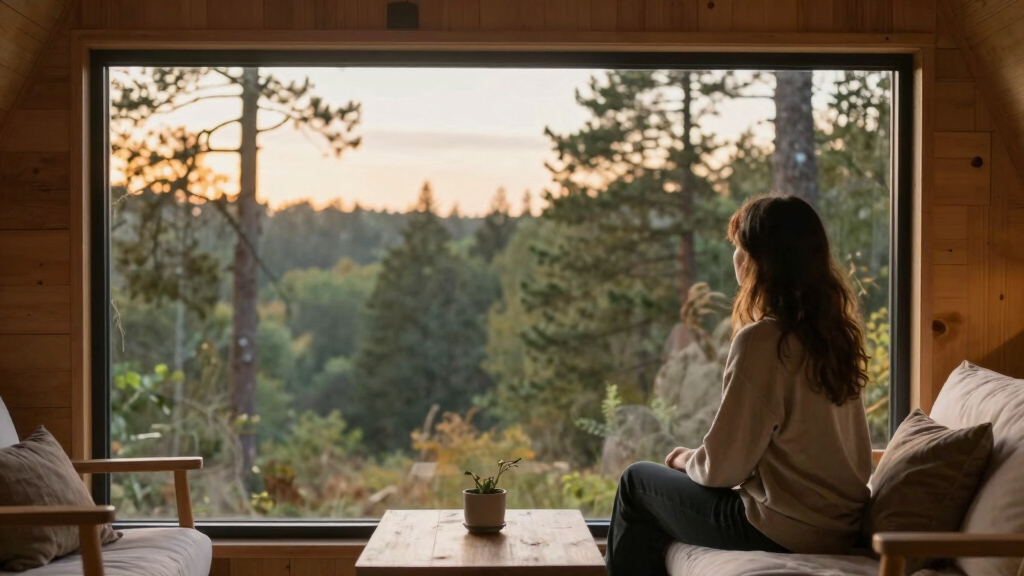
The Nature Pod’s exterior is clad in ThermoWood, a thermally-treated Scandinavian pine that offers enhanced durability and insulation. The structure features a curved roof covered with hexagonal bituminous shingles, backed by a 20-year warranty. Its defining feature is a nearly full-height, two-pane panorama window at the rear, which frames the landscape from the bed area, creating a seamless indoor-outdoor connection.
The interior includes a queen-sized bed positioned beneath the panorama window, with wood-lined walls and ceiling that foster a warm, cocoon-like atmosphere. The cabin’s layout also incorporates a compact kitchen with a cooktop, refrigerator, and openable window, along with space for a bathroom equipped with a shower, toilet, and sink. The design allows for customization, including options for off-grid solutions, heating, insulation, and additional furnishings, all configurable via an online platform.
The entire pod is built on a platform of glulam beams supported by concrete blocks or a trailer, making it portable. Electrical systems are pre-installed, with options for different power setups, enabling off-grid living. The design aims to blend Scandinavian minimalism with functional flexibility, suitable for lakeside, forest, or garden settings.
Impact of the Panorama Window on Cabin Design
The large rear panorama window redefines the tiny cabin experience by prioritizing views and natural light, making the Nature Pod more than just a shelter — it becomes a scenic retreat. Its modular options and mobility appeal to those seeking flexible, off-grid living solutions or unique vacation getaways. This design emphasizes the trend toward integrating indoor comfort with outdoor scenery, influencing future tiny house and cabin designs.
Products Worth Considering

Bose SoundLink Flex Bluetooth Speaker (2nd Gen), Portable Waterproof Speaker, Black

Levoit Core 600S-P Smart Air Purifier for Large Rooms

Samsung 48-Inch S90H OLED 4K Smart TV (2026)
As an affiliate, we earn on qualifying purchases.
Background of the Nature Pod and Its Market Position
Vagabond Haven, based in Sweden, specializes in lightweight, Scandinavian-inspired tiny structures. The company’s focus on ThermoWood cladding aligns with growing demand for durable, sustainable, and weather-resistant materials in outdoor living spaces. The Nature Pod builds on existing tiny house trends but stands out with its emphasis on panoramic views and modularity. The product launch follows increasing consumer interest in off-grid and scenic retreats, particularly in Europe, where outdoor lifestyles are highly valued.
Previous offerings from Vagabond Haven and similar companies have included small cabins and garden rooms, but the Nature Pod’s combination of mobility, high-quality materials, and expansive glazing marks a notable evolution in design philosophy.
“The Nature Pod is designed to dissolve the line between inside and out, offering a unique scenic experience that can be tailored to any landscape.”
— Vagabond Haven spokesperson
Unanswered Questions About the Nature Pod’s Long-Term Use
Details about the long-term durability of the ThermoWood cladding in extreme weather conditions remain unconfirmed. It is also unclear how the cabin performs in different climates, especially in regions with heavy snowfall or high humidity. Additionally, the availability and delivery timelines for the fully finished units or custom configurations are still being finalized.
Next Steps for Buyers and Market Expansion
Vagabond Haven plans to open pre-orders soon, with detailed specifications and customization options available via their online platform. The company is also exploring partnerships for wider distribution, including off-grid and eco-friendly living communities. Future developments may include expanded size options and integrated renewable energy solutions, but these are not yet confirmed.
Key Questions
Can I customize the interior layout of the Nature Pod?
Yes, Vagabond Haven offers an online configurator allowing customers to customize layouts, including options for bathroom, kitchen, and additional insulation or furnishings.
Is the Nature Pod suitable for year-round living?
With options for extra insulation, heating, and off-grid solutions, the cabin can be adapted for year-round use, though its primary design is for scenic retreats and seasonal stays.
How portable is the cabin?
The cabin is built on a trailer or supported by a platform on concrete blocks, making it mobile and easy to relocate, provided it is transported on a standard trailer or truck.
What is the starting price for the DIY kit?
The basic DIY kit starts at approximately €5,000, with additional costs for customization and finishing depending on options selected.
What materials are used for the cladding?
The exterior is clad in ThermoWood, a thermally-treated Scandinavian pine known for its durability and stability in outdoor conditions.
Source: Tiny House Talk