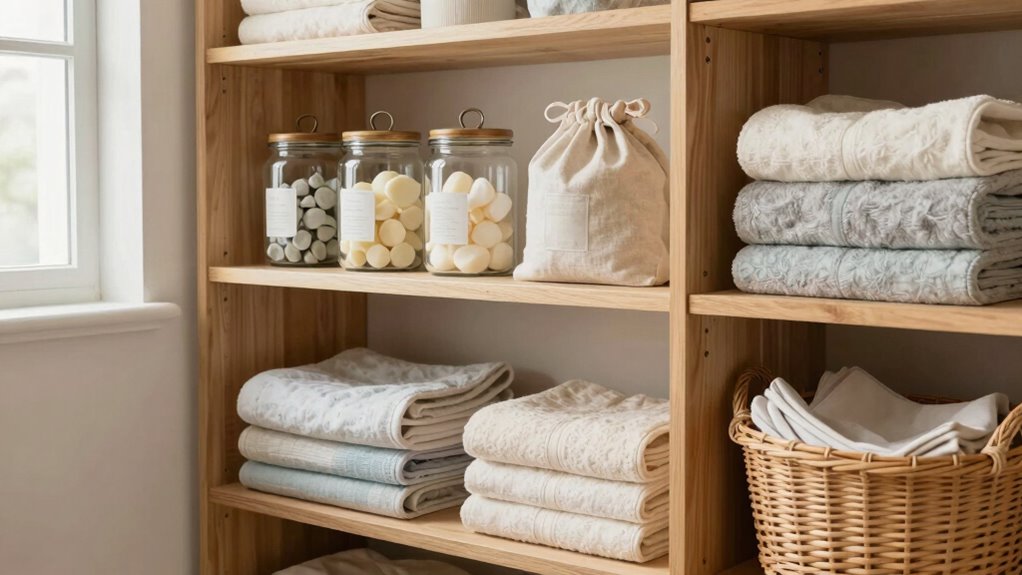

To create a low-waste linen closet, start by evaluating your current linens and choosing eco-friendly storage solutions like glass jars, bamboo baskets, or cloth bags. Opt for natural, chemical-free detergents and buy in bulk to reduce packaging. Regularly declutter, donate, or repurpose linens, and keep everything organized with clear labels. Ventilate your closet to prevent mustiness and maintain freshness. Want to discover more tips to make your linen closet truly eco-friendly?
Key Takeaways
- Assess and declutter linens regularly, donating or repurposing unused items to prevent excess accumulation.
- Use sustainable storage options like glass jars, bamboo baskets, or cloth bags, labeled for easy organization.
- Purchase eco-friendly laundry supplies in bulk and replace disposable items with reusable alternatives.
- Ventilate the linen closet frequently to prevent mustiness and maintain air quality.
- Support brands committed to sustainability and minimize packaging to reduce waste.
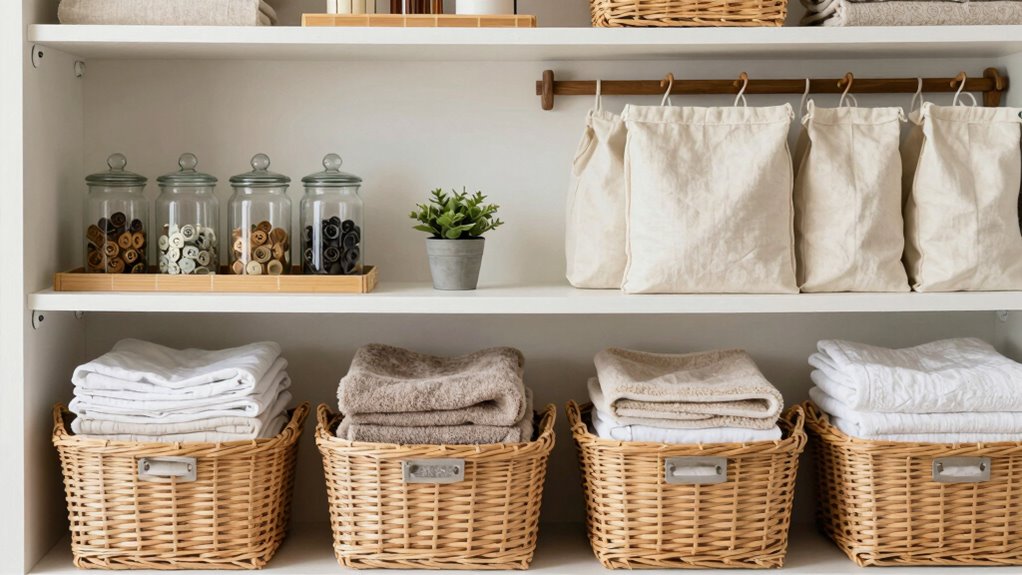
Creating a low-waste linen closet is a simple yet effective way to reduce your environmental impact and keep your space organized. The key is to focus on minimizing waste while maintaining functionality and cleanliness. Start by evaluating what you already have, then plan to replace disposable or single-use items with eco-friendly alternatives. Eco-friendly detergents are an essential part of this process. Look for options made from natural ingredients that don’t contain harsh chemicals or synthetic fragrances. These detergents typically come in concentrated forms or biodegradable packaging, reducing plastic waste and water pollution. Using eco-friendly detergents not only cuts down on harmful substances that can pollute waterways but also supports a more sustainable lifestyle.
Create a low-waste linen closet with eco-friendly detergents and sustainable storage to reduce environmental impact and stay organized.
Next, consider your storage solutions. Sustainable storage solutions are crucial for maintaining a low-waste linen closet. Instead of plastic bins or single-use plastic bags, opt for glass jars, bamboo baskets, or cloth storage bags. These materials last longer, are biodegradable, and can be reused or recycled easily. Label your containers clearly to keep things organized and avoid overbuying or duplicating items. When you wash your linens, fold or roll them neatly to maximize space and reduce the need for additional storage. This also helps prevent wrinkles and damage, extending the lifespan of your linens. Incorporating reusable storage options can further enhance sustainability by reducing the reliance on disposable containers. Additionally, choosing versatile storage solutions that can be repurposed for other uses supports a more circular approach to household organization. Incorporating eco-conscious practices into your routine can help reinforce a sustainable mindset and further reduce waste.
Eliminate unnecessary packaging by buying in bulk whenever possible. Purchasing larger quantities of eco-friendly detergents and laundry supplies reduces packaging waste considerably. When shopping, choose brands committed to sustainability and minimal packaging. Avoid disposable dryer sheets; instead, use natural alternatives like wool dryer balls, which are reusable and help reduce energy consumption by shortening drying times. Incorporating natural scenting options like dried herbs or essential oils in reusable sachets can keep your linens smelling fresh without relying on synthetic fragrances that often come in plastic spray bottles. Additionally, choosing air purification solutions can help maintain a fresh environment in your linen storage area, reducing the need for chemical fresheners and enhancing overall indoor air quality. Regularly ventilating your linen closet ensures a healthier space and prevents mustiness.
Finally, maintain your low-waste linen closet by regularly decluttering and reassessing your needs. Donate or repurpose linens you no longer use or need, instead of throwing them away. Keep your storage solutions clean and organized, making it easier to see what you have and prevent unnecessary purchases. Using sustainable storage options not only minimizes waste but also encourages mindful consumption. By making these small but impactful changes, you’ll create a more sustainable, clutter-free linen closet that reduces waste and promotes eco-conscious living. This approach not only benefits the environment but also simplifies your laundry routine, transforming a mundane chore into a mindful, eco-friendly practice.
eco-friendly linen storage baskets
As an affiliate, we earn on qualifying purchases.
As an affiliate, we earn on qualifying purchases.
Frequently Asked Questions
How Often Should I Wash My Linens to Reduce Waste?
You should wash your linens about once a week to balance hygiene and laundry frequency, helping to reduce waste. Proper laundry frequency extends your linen lifespan by preventing excessive wear from frequent washing, or buildup from infrequent cleaning. Using eco-friendly detergents and washing in full loads also minimizes waste. By maintaining a consistent routine, you keep your linens fresh while conserving resources, supporting a low-waste lifestyle.
What Eco-Friendly Detergents Are Best for Linen Care?
Think of eco-friendly detergents as gentle guardians for your linens. You should choose products with biodegradable ingredients and eco-friendly packaging to minimize waste and environmental impact. Look for brands committed to sustainability, such as those that source ingredients responsibly and use recyclable containers. These detergents clean effectively without harsh chemicals, helping your linens stay fresh longer while supporting a healthier planet. Your conscious choice makes a meaningful difference.
How Can I Repurpose Old Linens Instead of Discarding Them?
You can practice linen upcycling by turning old sheets and towels into cleaning rags, quilts, or even decorative pillow covers. Get creative with textile dyeing to refresh faded linens with vibrant colors, giving them a new life. Repurposing old linens not only reduces waste but also adds a personal touch to your home. Embrace these eco-friendly ideas to extend the lifespan of your textiles and minimize clutter.
What Are Sustainable Storage Options for Linen Organization?
Like a vintage typewriter, sustainable storage options make your linen organization timeless. You should prioritize linen folding to keep everything neat and space-efficient. Use eco-friendly storage containers made from glass, bamboo, or recycled materials to reduce waste and avoid plastic. These choices help you keep your linens organized, minimize environmental impact, and create a low-waste linen closet that’s both functional and eco-conscious.
How Do I Prevent Linen Waste From Overbuying?
To prevent linen waste from overbuying, focus on effective overstock management and linen preservation. Regularly assess your current linen inventory to avoid unnecessary purchases. Use a rotation system to guarantee older linens are used first, maintaining their quality. Keep track of usage patterns to buy only what you need, and donate or repurpose linens that are no longer in use, reducing waste and maintaining an organized, sustainable linen collection.
Conclusion
By choosing eco-friendly storage solutions and mindful laundry habits, you can substantially reduce waste in your linen closet. Did you know that Americans throw away over 10 million tons of textiles each year? Making small changes, like using reusable storage bags and washing only full loads, adds up. Your efforts not only declutter your space but also contribute to a healthier planet. Start today—your linen closet and the environment will thank you!