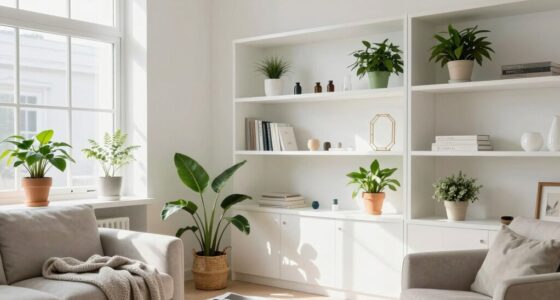
By swapping out new, mass-produced decor for upcycled and thrifted items, you save money over time while reducing waste. Choosing eco-friendly materials and repurposing existing furniture extends their lifespan, helping you avoid unnecessary purchases. Upcycling and sourcing from local markets also keep costs down and add unique character to your home. Small, sustainable choices not only benefit the environment but can lead to long-term savings. Keep exploring to discover how these swaps can transform your space and savings.
Key Takeaways
- Upcycling existing furniture reduces the need for new purchases, saving money over time.
- Thrift shopping offers affordable, unique decor options that can be customized, lowering overall decorating costs.
- Choosing eco-friendly materials extends furniture lifespan, decreasing the frequency of replacements and long-term expenses.
- Repainting or refinishing items with non-toxic paint refreshes decor without additional spending.
- Supporting sustainable practices encourages smarter, cost-effective decorating choices aligned with environmental values.
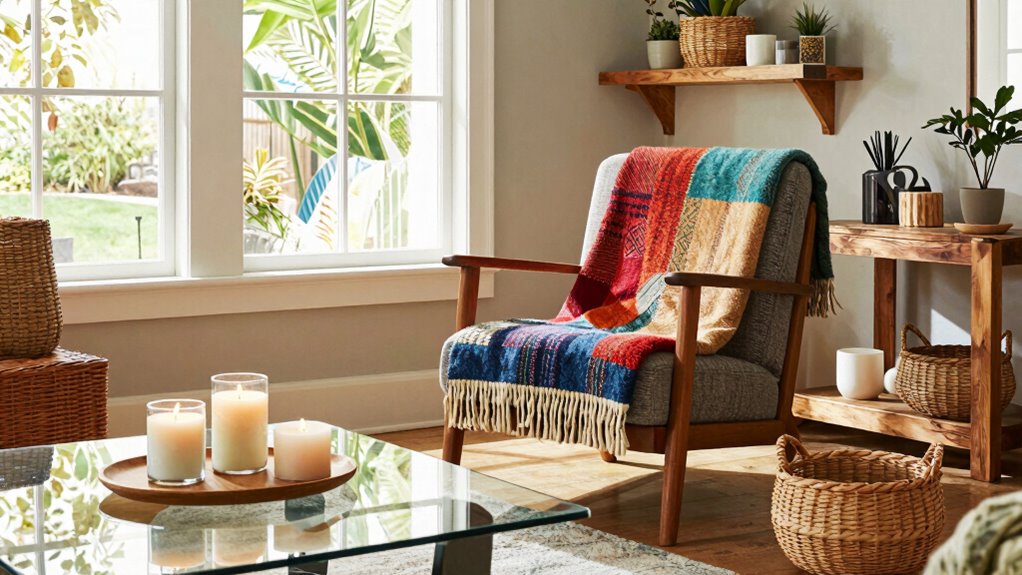
If you’re looking to refresh your home while reducing your environmental impact, a sustainable decorating swap is a great place to start. Instead of constantly buying new decor, furniture, or accessories, you can focus on transforming what you already own or acquiring pre-loved items. This approach not only minimizes waste but also allows you to create a unique, personalized space. To make the most of this, prioritize eco-friendly materials whenever you’re selecting new pieces or making improvements. Look for furniture crafted from sustainably sourced wood, bamboo, or reclaimed materials. These eco-friendly options reduce deforestation and lower your carbon footprint compared to conventional materials. When it comes to textiles, choose natural fibers like organic cotton, linen, or hemp, which are biodegradable and produced with fewer chemicals. Incorporating eco-friendly materials into your decorating swap ensures your home remains stylish while supporting sustainable practices. Additionally, choosing biodiversity-friendly materials helps preserve ecosystems and promotes environmentally responsible sourcing.
Upcycling techniques become your best friend during a sustainable decorating swap. Instead of discarding old furniture, consider giving it a fresh look with paint, new upholstery, or creative modifications. For example, repainting an outdated dresser with non-toxic paint can turn it into a focal point, while repurposing vintage crates as storage adds charm and functionality. You might also refinish or reupholster existing chairs instead of buying new ones, saving money and reducing waste. Upcycling extends the life of your belongings, saving you money over time because you’re not constantly replacing items. It’s a smart way to bring new energy into your space without the environmental cost of manufacturing and shipping new products. Incorporating upcycling techniques not only reduces waste but also enhances your home’s character and uniqueness. Exploring eco-friendly materials further can help you make more informed choices that align with your sustainability goals. Embracing a mindset of sustainable consumption can also inspire you to seek out innovative ways to reduce your overall ecological footprint.
By engaging in a sustainable decorating swap, you also tap into the charm of thrift shopping and local markets. Buying secondhand furniture and decor often costs less than new items and offers unique pieces that add character to your home. Over time, these savings add up, making your overall decorating budget stretch further. Plus, as you get more skilled with upcycling techniques, you’ll find it easier and more enjoyable to customize pieces to match your style. This process promotes creativity and self-sufficiency, reducing reliance on fast furniture trends that quickly lose appeal and are discarded. When you combine thrift shopping with eco-conscious choices, you contribute positively to reducing the demand for new manufacturing and the environmental impact associated with it.
In the end, a sustainable decorating swap isn’t just about saving money—it’s about making smarter, more eco-conscious choices. By focusing on eco-friendly materials and upcycling techniques, you nurture a home environment that’s beautiful, functional, and aligned with your values. Over time, these small changes will not only benefit the planet but also leave you with a home that truly reflects your personality and commitment to sustainability.

Guerilla Furniture Design: How to Build Lean, Modern Furniture with Salvaged Materials
As an affiliate, we earn on qualifying purchases.
As an affiliate, we earn on qualifying purchases.
Frequently Asked Questions
How Do I Identify Truly Sustainable Decorating Options?
To identify truly sustainable decorating options, look for items aligned with eco-friendly trends and sustainable design principles. Check labels for certifications like FSC or Green Seal, which guarantee eco-conscious sourcing. Opt for recycled, upcycled, or locally-made pieces to reduce environmental impact. Prioritize durable, timeless designs over trendy, disposable décor. By doing so, you support sustainability while creating a beautiful, eco-friendly space that lasts.
Are Eco-Friendly Materials More Durable Than Traditional Ones?
You might think eco-friendly materials lack durability, but vintage charm and artistic expression prove otherwise. Many sustainable options, like reclaimed wood or natural fibers, actually outlast traditional materials when properly maintained. These eco-friendly choices often combine aesthetic appeal with resilience, allowing you to enjoy their beauty over time. So, embracing eco-friendly materials not only supports sustainability but also offers long-term durability, making your decorating investments more worthwhile.
What Is the Initial Cost Difference for Sustainable Swaps?
The initial cost for sustainable swaps like eco-friendly paint and recycled textiles is often higher upfront, typically 10-20% more than traditional options. Eco-friendly paint tends to cost more due to eco-conscious ingredients, and recycled textiles may have a slightly higher price because of the processing involved. However, these investments pay off over time through durability, health benefits, and environmental impact, making them a smart long-term choice.
How Can I Incorporate Sustainable Decorating Into Small Spaces?
Think of your small space as a blank canvas, waiting for a sustainable masterpiece. You can weave vintage furniture and upcycled decor into your décor, making every inch count. Use multi-functional pieces to maximize space and add character. Incorporate eco-friendly textiles and repurposed art to create a cozy, stylish vibe. This approach transforms your small space into an eco-conscious haven, proving that less truly is more, without sacrificing style.
Are There Any Certification Labels to Look for in Sustainable Decor?
Yes, you should look for certification labels like Fair Trade and Organic Certifications when shopping for sustainable decor. Fair Trade guarantees ethical labor practices and fair wages, while Organic Certifications assure environmentally friendly materials free from harmful chemicals. These labels help you make responsible choices, support sustainable practices, and guarantee the products you select are eco-friendly and socially responsible, making your small space both stylish and sustainable.
Conclusion
By swapping out disposable decor for sustainable, reusable pieces, you not only cut costs but also reduce waste. This approach aligns with the theory that mindful consumption benefits both your wallet and the environment. Over time, these small changes can create a lasting impact, proving that eco-friendly decorating isn’t just trendy — it’s practical. Embrace these swaps, and you’ll find that sustainable decorating becomes a simple, rewarding part of your home.