
TL;DR

Get furniture and decor delivered free with Prime
- Fast, free delivery on millions of items
- Prime Video, Amazon Music and more included
- Member-only deals all year
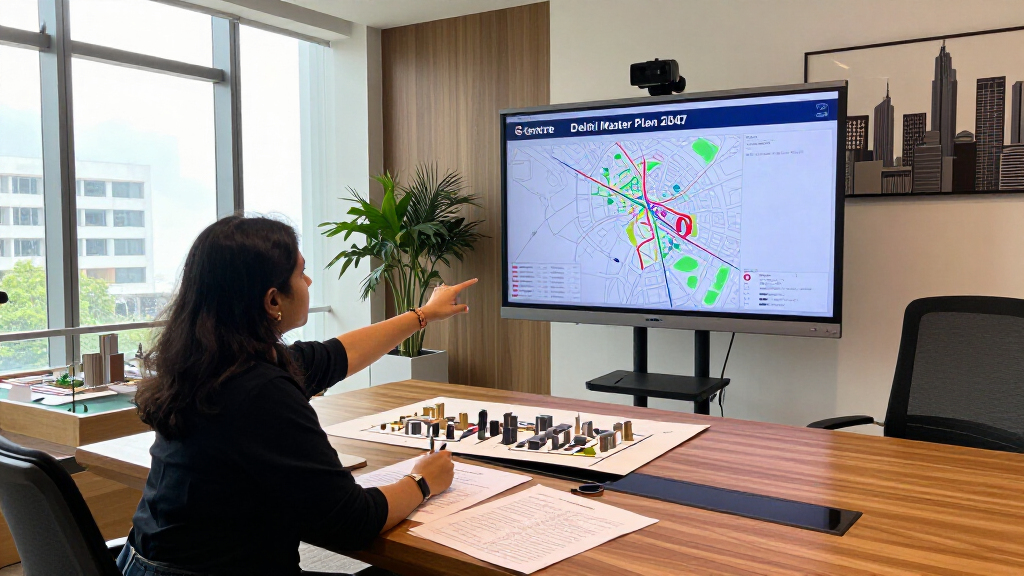
The Indian government has unveiled the Delhi Master Plan 2047, a comprehensive blueprint to transform Delhi into a global city by 2047. The plan aims to accommodate the city’s projected population of 3.2 crore and enhance infrastructure, urban development, and sustainability.
The Union Ministry of Housing and Urban Affairs has officially unveiled the Delhi Master Plan 2047, a strategic framework aimed at transforming the national capital into a world-class city over the next 23 years. The plan, presented on March 2024, underscores the Centre’s commitment to sustainable urban development and infrastructure enhancement, with the goal of accommodating Delhi’s projected population of 3.2 crore residents.
The Delhi Master Plan 2047 sets out a vision for the city’s growth, focusing on improving transportation, housing, green spaces, and economic infrastructure. It emphasizes sustainable development principles, including increased green cover, efficient waste management, and modern urban planning techniques.
According to officials from the Ministry, the plan aims to balance urban expansion with environmental sustainability, addressing issues such as traffic congestion, pollution, and inadequate public amenities. The plan also incorporates inputs from various stakeholders, including local authorities, urban planners, and community representatives, to ensure a comprehensive approach.
While the detailed policies and specific projects are yet to be finalized, the plan marks a significant step toward long-term urban restructuring. It is expected to guide the development of new residential and commercial zones, improve public transportation networks, and enhance the quality of life for Delhi’s residents.
Implications of Delhi Master Plan 2047 for Urban Development
The unveiling of the Delhi Master Plan 2047 signifies a major policy shift aimed at elevating Delhi to a global city. It highlights the Centre’s focus on sustainable urban growth and infrastructure modernization, which could influence economic activity, environmental health, and quality of life in the city. The plan’s emphasis on green spaces and efficient transportation aligns with India’s broader goals of climate resilience and urban competitiveness.
For residents, the plan promises improved amenities, better housing options, and reduced congestion, though the specifics of implementation remain to be seen. It also signals increased government investment and oversight, which could impact local governance and development priorities.
As an affiliate, we earn on qualifying purchases.
Background and Long-Term Urban Planning in Delhi
Delhi’s urban development has historically been characterized by rapid population growth, infrastructural strain, and environmental challenges. Past master plans have aimed to manage expansion, but many issues persist, including traffic congestion, pollution, and inadequate public services.
The current plan, Delhi Master Plan 2047, builds on previous initiatives but aims for a more integrated and sustainable approach. It is part of India’s national urban development strategy, which seeks to develop 100 smart cities and improve existing urban centers. The plan also responds to the increasing pressure from urbanization, with Delhi’s population expected to grow steadily over the next two decades.
Officials have indicated that the plan reflects lessons learned from earlier efforts and incorporates modern urban planning principles, including smart city concepts and climate adaptation strategies.
“Our vision for Delhi is to transform it into a world-class city by 2047, balancing growth with sustainability and inclusivity.”
— Union Minister for Housing and Urban Affairs
Details of Implementation and Specific Projects Still Unclear
While the master plan has been announced, many specifics regarding project execution, funding, and timelines remain undisclosed. It is unclear how quickly key infrastructure projects will commence or how existing land use policies will adapt to the new vision.
There is also uncertainty about the role of local authorities and the private sector in executing the plan, as well as the potential challenges in coordinating across multiple agencies.
Next Steps in Policy Finalization and Project Rollout
The government is expected to release detailed implementation strategies and project timelines in the coming months. Stakeholder consultations and public feedback are likely to shape the final version of the plan.
Major infrastructure projects, such as transportation corridors and green space development, are anticipated to be prioritized. Monitoring and evaluation mechanisms will be established to track progress toward the 2047 vision.
Key Questions
What are the main goals of the Delhi Master Plan 2047?
The plan aims to develop Delhi into a world-class, sustainable city with improved infrastructure, green spaces, transportation, and housing for its projected 3.2 crore residents by 2047.
When will the detailed projects and timelines be announced?
The government is expected to release detailed implementation strategies in the coming months, following stakeholder consultations and planning revisions.
How will the plan address environmental concerns?
The plan emphasizes increasing green cover, promoting eco-friendly transportation, and implementing sustainable waste management practices to reduce pollution and enhance environmental health.
Will existing residents be displaced by new development projects?
Details on land use and displacement are not yet clear. The plan aims for inclusive growth, but specific policies will be clarified during the implementation phase.
How does this plan compare to previous master plans for Delhi?
This plan adopts a more integrated and sustainability-focused approach, learning from past efforts to better manage urban growth and environmental challenges.
Source: local
Halloween Picks
halloween
As an affiliate, we earn on qualifying purchases.